
Implant Healing Time: What to Expect After Surgery
By Meditrust Team · Published
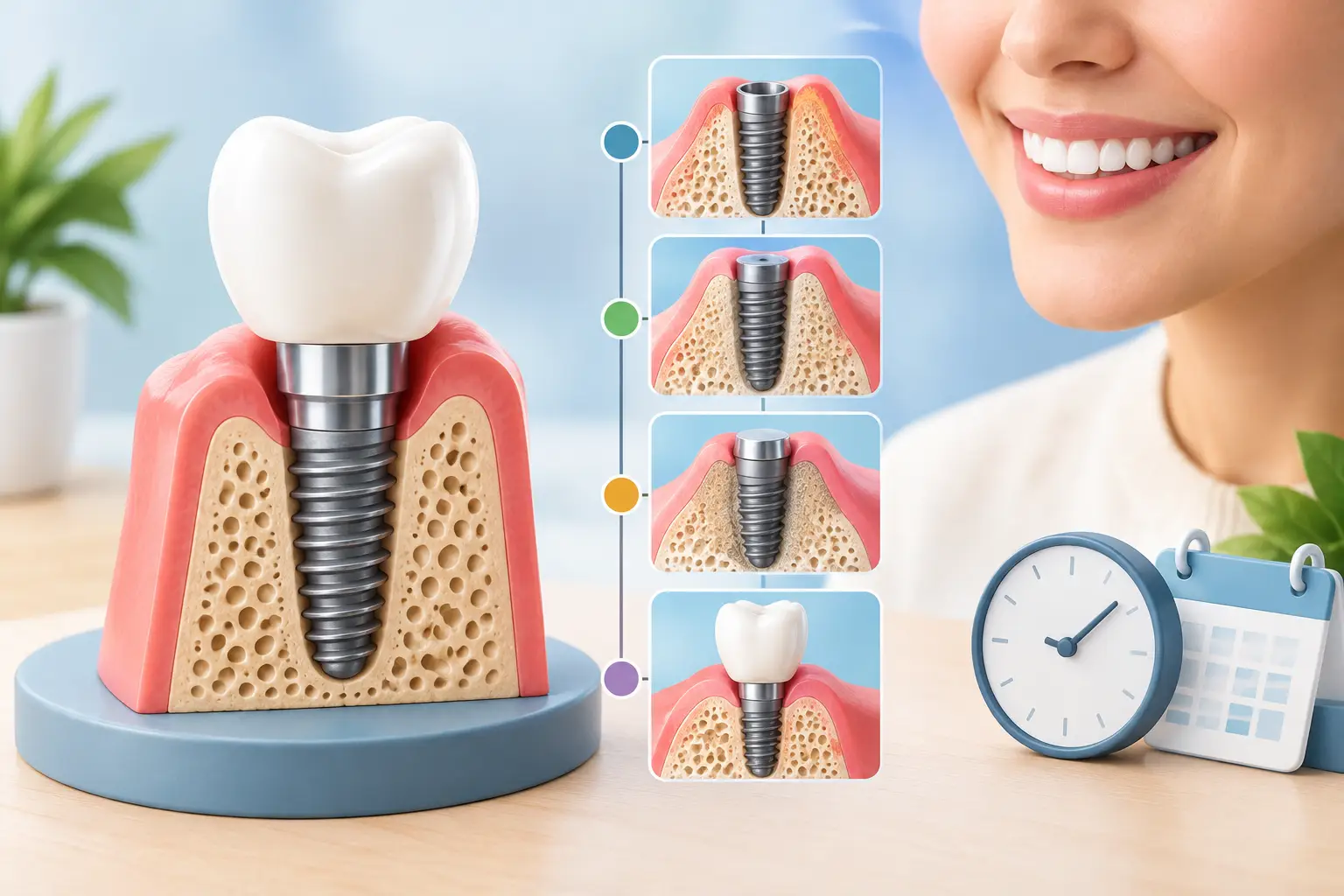
A dental implant is not finished when the implant post has been placed. The visible part may be small, but the work beneath the gum and inside the jawbone needs time to settle. Implant healing time is therefore one of the first things to understand when comparing treatment plans, especially if you are considering travelling abroad for care.
A responsible clinic should explain the likely timetable before you book, not after surgery. That timetable depends on your bone quality, the position of the implant, whether an extraction or bone graft is needed, and whether a temporary tooth can be fitted safely. There is no single schedule that suits every mouth.
How long is implant healing time?
For many patients, the jawbone takes around three to six months to fuse with a dental implant. This biological process is called osseointegration. It is what gives the implant the stable foundation needed to support a crown, bridge or full-arch restoration.
That does not mean you will feel unwell for months. The first stage of recovery is usually much shorter. Tenderness, swelling and minor bruising are common for several days, often improving noticeably within a week. Gum healing generally progresses over one to two weeks, although the area may still feel unfamiliar.
The longer wait is about the bone, not ongoing pain. An implant can look fine from the outside while the bone is still building a secure bond around it. That is why the final, permanent tooth is often fitted only after the clinician has reviewed healing and stability.
For some people, the overall journey is shorter. If the bone is healthy and the implant is secure at placement, a clinic may fit a temporary tooth on the same day or shortly afterwards. This is commonly described as immediate loading. It can be suitable in carefully selected cases, but it is not automatically the better option. A temporary tooth still needs protecting from heavy biting forces while healing takes place.
The usual healing stages after an implant
The first 24 to 72 hours are usually when swelling and discomfort are most noticeable. Your clinician may advise pain relief, a soft diet, gentle cleaning around the site and avoiding strenuous exercise. Follow the instructions provided for you rather than relying on a friend’s experience or a social-media video.
During the first week, the gum begins to close around the treatment area. If stitches were used, they may dissolve or be removed according to the clinic’s plan. Many patients can return to ordinary routines quickly, but should avoid chewing directly on the implant site.
Over the following weeks, the soft tissue continues to mature. If a temporary restoration has been fitted, it may need adjustment so that it does not take too much pressure when you bite. This is not a cosmetic detail. Excess force can compromise a newly placed implant.
Between roughly three and six months, osseointegration is assessed. The clinician may use an examination, X-rays and stability testing before moving to the final crown or bridge. Upper-jaw implants sometimes take longer than lower-jaw implants because the bone can be less dense. A grafted area may also need additional time before, or after, implant placement.
What can make healing faster or slower?
A clinic should not promise an exact implant timeline without seeing appropriate scans and reviewing your medical history. Healing varies, and the safest plan is the one based on your clinical position rather than the shortest possible trip.
Bone volume and density matter. Where there has been tooth loss for some time, the jawbone may have reduced in volume. A bone graft or sinus lift can make implant treatment possible, but it changes both the procedure and the recovery timetable.
Your general health also matters. Conditions such as poorly controlled diabetes can affect healing, as can medicines that influence bone metabolism or immune response. Smoking and vaping can increase the risk of healing problems, particularly in the early period. Being candid in your medical questionnaire helps the clinical team plan safely. It is not there to rule you out unnecessarily.
Oral hygiene and bite forces matter too. Gum disease should be assessed and managed, and grinding or clenching may mean a night guard is recommended. An implant does not decay like a natural tooth, but the gum and bone around it still need daily care. Infection around an implant can lead to bone loss if it is not addressed early.
Planning treatment abroad around implant healing time
For patients travelling from the UK to Turkey, the travel plan must reflect the clinical plan. A lower quote is of little use if it assumes a procedure or timescale that is unsuitable for your mouth.
Many implant cases involve two visits. The first visit may include extraction, grafting where needed and implant placement. You then return home during the bone-healing phase, with a later visit planned for the final restoration. This approach can be a sensible option because it respects the biology of healing rather than trying to compress every stage into one stay.
Other cases can be completed more quickly, particularly where an implant is being placed into healthy bone and a carefully designed temporary or final restoration is clinically appropriate. Full-arch implant work has its own planning requirements. It can involve immediate fixed temporary teeth, but that does not mean the final bridge should be rushed.
Before travelling, ask for a written treatment plan that distinguishes between temporary and permanent teeth, explains the expected number of visits, and identifies any procedures that may become necessary after scans. You should also know where you are staying, how long you need to remain locally after surgery, who to contact out of hours, and what support is available once you are back in the UK.
The clinic matters as much as the surgeon. It should be clear who is carrying out each stage, what materials are proposed, how complications are handled and whether the price is itemised. A named coordinator can also make a real difference when you are arranging flights, transfers, appointments and follow-up around a treatment timetable.
Eating, cleaning and travelling after implant surgery
Most patients start with soft, cool or lukewarm foods and gradually return to more normal eating as advised. Avoid chewing hard foods directly over the surgical site in the early phase. Nuts, crusty bread, hard sweets and tough meat can place more pressure on a new implant than you realise.
Keep the area clean, but do so gently. Your clinician may recommend a particular toothbrush, mouthwash or cleaning method for the first days after surgery. Do not use a mouthwash simply because it was recommended online, and do not stop prescribed medication early without clinical advice.
Air travel is often possible after straightforward implant placement, but the right timing depends on the procedure and your recovery. If you have had a sinus lift, extensive grafting, sedation or another surgical procedure at the same time, the advice may differ. Build enough time into the trip for a post-operative check before flying home where the clinic recommends it.
When to contact the clinic urgently
Some swelling, tenderness and mild bleeding can be expected after surgery. But do not wait for a routine review if symptoms are worsening rather than settling. Contact the treating clinic promptly if you have:
- pain or swelling that becomes significantly worse after the first few days;
- persistent bleeding that does not respond to the advice you were given;
- fever, a bad taste, discharge or increasing redness around the site;
- a loose implant, loose temporary tooth or a sudden change in your bite;
- difficulty swallowing, breathing or opening your mouth, which requires urgent medical assessment.
Clear aftercare is particularly valuable when treatment has taken place overseas. You should leave with written instructions, copies of relevant clinical information and a defined route for raising concerns after you return. Good coordination is not a replacement for clinical care, but it can prevent you from being left between a clinic abroad and an unfamiliar provider at home.
A sensible way to set expectations
The best implant plan is not always the fastest one. A shorter timetable can be appropriate when scans, bone quality and implant stability support it. In other cases, allowing several months for healing protects the result you are investing in.
Thinking it through is the first step: ask what is temporary, what is permanent, when you can safely travel, and who will remain available if your recovery does not follow the expected course. A good treatment journey should leave you clear about the next stage, not simply relieved that the first appointment is over.
Already have a quote or a photo of your smile?
Send it to us on WhatsApp for an honest, confidential second opinion from our Dorset team. Free, and no obligation.
Work out your own cost with our Turkey teeth cost calculator
Prefer the full form? Start your enquiry