
Can Dental Implants Be Staged? A Clear Answer
By Meditrust Team · Published
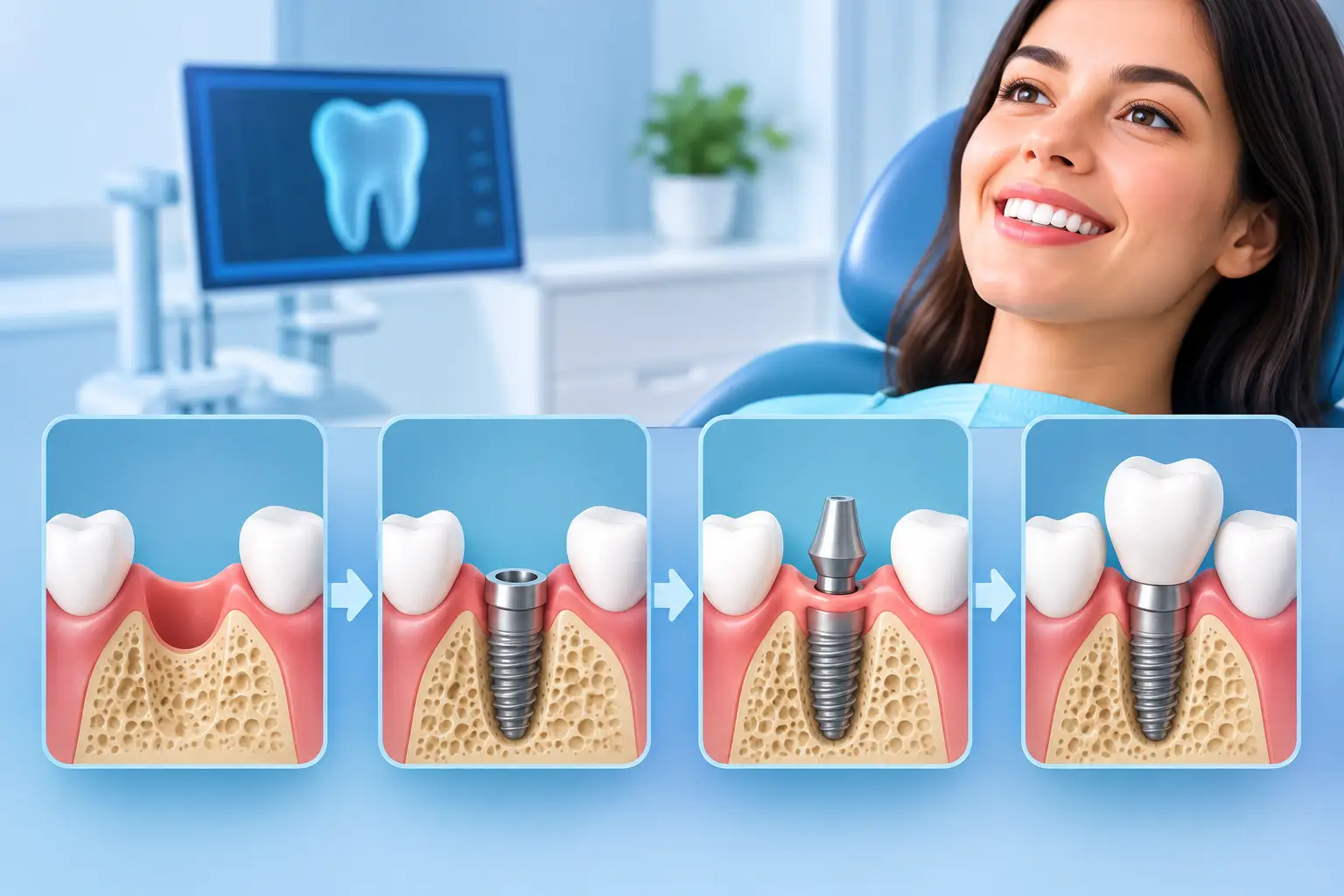
A missing tooth can feel like something you want sorted in one visit. But implant treatment is often a process, not a single appointment. So, can dental implants be staged? Yes - and for many people, spacing the treatment over planned stages is the safest and most predictable route.
That does not mean you are being offered a drawn-out plan without reason. Each stage should have a clinical purpose: protecting healing, building enough bone, managing gum health or allowing your dentist to check that an implant has integrated properly before fitting the final tooth. If you are travelling from the UK for treatment, the timing also needs to work in practical terms, with clear trip dates, itemised costs and a named person who can coordinate the plan from start to aftercare.
Can dental implants be staged safely?
They can, provided the treatment plan is based on a proper assessment rather than a standard package. Dental implants are small titanium fixtures placed into the jawbone to support a crown, bridge or full-arch restoration. Once placed, the bone needs time to heal around the implant - a process called osseointegration.
For some patients, this happens alongside an immediate temporary tooth. For others, it is better to leave the implant undisturbed for several months before adding pressure from a final restoration. Neither approach is automatically better. The condition of your bone, bite, gums, general health and the number and position of teeth being replaced all affect the decision.
Staged care can also make a large treatment plan feel more manageable. Someone replacing several failing teeth may first need infection controlled and damaged teeth removed. Implants can then be placed once the sites have healed, with permanent bridges fitted only after the clinician is satisfied with stability and bite.
What the stages usually involve
A staged implant plan is not always the same, but it commonly follows a sequence like this.
Assessment and treatment planning
This is where the quality of the plan starts. The dentist should review your dental history, examine your mouth and use appropriate imaging, often including a 3D scan. They need to establish whether there is active gum disease, infection, insufficient bone or a bite issue that could compromise an implant.
For patients considering treatment abroad, this is also the stage to ask exactly what is included. A quote should distinguish between consultations, scans, extractions, bone grafting, implant fixtures, temporary teeth, final crowns or bridges, medication and transfers. A low headline figure is not useful if major parts of treatment appear later as extras.
Preparation, extractions or grafting
Sometimes an implant can be placed at the same time as a tooth is removed. In other cases, the site needs to heal first. If bone volume is limited, a graft or sinus lift may be recommended before, or occasionally at the time of, implant placement.
This is one reason a staged approach can be sensible. Grafted bone needs time to mature. Rushing ahead to fit an implant before the area is ready may reduce predictability. The correct waiting period varies, but it is often measured in months rather than days.
Implant placement
During the surgical stage, the implant fixture is placed in the jawbone. A temporary tooth may be possible, especially in visible areas, but a temporary is not the same as permission to bite normally on it. You may be asked to follow a soft diet and avoid loading the area while healing takes place.
A well-organised overseas plan should allow adequate time in the destination before you fly home. You should not be scheduled tightly around surgery with no room for review, discomfort or minor adjustments. Ask how long you will need to stay, who you contact outside clinic hours and what information you will take home for your UK dentist if needed.
Healing and review
The healing period is where patience does real work. Depending on the case, it may last around three to six months, sometimes longer where grafting, complex bite issues or medical factors are involved. During this time, the implant and bone should form a stable connection.
If you live in the UK, you may have a local review during this period, although the treating clinician should remain responsible for the implant plan. Keep copies of your scans, implant passport or component details, clinical notes and treatment invoices. This documentation is useful if another dental professional needs to assess you at home.
Final teeth and bite adjustment
Once the implant is judged ready, the final crown, bridge or full-arch restoration is designed and fitted. This may require a second trip. The final teeth should not simply look convincing; they should sit comfortably, allow good cleaning and be adjusted to work with your bite.
It is common to need minor refinements after fitting. A responsible provider will explain what their aftercare covers, how long it lasts and how issues are handled after you return to the UK.
When a one-trip approach may be possible
Immediate implant treatment can be appropriate in selected cases. For example, a tooth with a healthy surrounding socket may be removed and replaced with an implant at the same appointment, sometimes with a temporary crown. Full-arch protocols may also offer fixed temporary teeth shortly after implant placement.
This can be attractive when travel time is limited, but it is not a shortcut suitable for everyone. Immediate loading depends on achieving good initial implant stability and having a bite that can be managed safely. Smoking, untreated periodontal disease, heavy grinding, poor bone quality and uncontrolled health conditions can all alter the recommendation.
Be wary of anyone promising that every patient can leave with permanent teeth within a few days. Temporary teeth and final teeth have different jobs. The first protects appearance and function while tissues heal; the second should be made only when the foundations are stable enough to support it well.
Why staging can be the better value, not the slower option
A phased plan can appear more expensive because it involves more appointments and potentially more than one trip. Yet the alternative - pushing ahead before infection, gum disease or inadequate bone is addressed - can cost more in discomfort, repairs and repeat treatment.
The practical question is not simply, “How many visits will this take?” It is, “What makes this plan predictable for my mouth?” A clinician should be able to explain that in plain language. If they cannot explain why they are recommending an immediate or delayed approach, you do not have enough information to consent confidently.
For larger cases, ask whether the quotation accounts for every likely stage and whether it identifies potential additional procedures that can only be confirmed after scans or examination. Transparency does not mean pretending there are no variables. It means being clear about the variables before you book flights.
Planning staged implant treatment abroad
Travelling for treatment adds another layer of organisation. There may be a gap of months between the surgical and restorative visits, so the clinic needs to give you a written timeline rather than a vague assurance that you can “come back later”. You should know the expected number of trips, recommended length of stay for each, likely recovery restrictions and what happens if a healing review changes the plan.
It is also sensible to check how continuity is maintained. You do not want to repeat your story to a different person at every stage or discover that the clinician who planned your case is unavailable when you return. The clinic matters as much as the surgeon: sterilisation standards, imaging, laboratory quality, record-keeping and communication all shape the result.
Meditrust coordinates patients with accreditation-checked partner clinics and keeps one named coordinator involved from the first enquiry through UK aftercare. That is particularly useful with staged treatment, where small details between trips matter. It is not a replacement for clinical judgement, but it can help ensure the travel plan, written quotation and clinical timetable are joined up.
Questions worth asking before you commit
Before agreeing to staged implants, ask the provider whether you need grafting or gum treatment, why they recommend immediate or delayed loading, and how long they expect each healing phase to take. Ask what temporary solution you will have between stages and whether you will be able to eat, speak and travel comfortably.
You should also ask for the make and system of implant being used, what guarantee or aftercare terms apply, and how complications are dealt with once you are back in the UK. No ethical provider can guarantee that every implant will heal exactly as predicted, but they should set out the process if it does not.
Finally, be candid about your medical history, medications, smoking, teeth grinding and any previous gum problems. These details are not obstacles to be hidden in pursuit of a fast treatment date. They are the information that helps a clinician choose the safer route.
A staged implant plan asks for more patience, but it can also give your treatment the time it needs to succeed. The right next step is a careful assessment and a written plan you understand - then you can make arrangements with your eyes open, rather than feeling rushed by the calendar.
Already have a quote or a photo of your smile?
Send it to us on WhatsApp for an honest, confidential second opinion from our Dorset team. Free, and no obligation.
Work out your own cost with our Turkey teeth cost calculator
Prefer the full form? Start your enquiry