
A Guide to Dental Bone Grafting for Implants
By Meditrust Team · Published
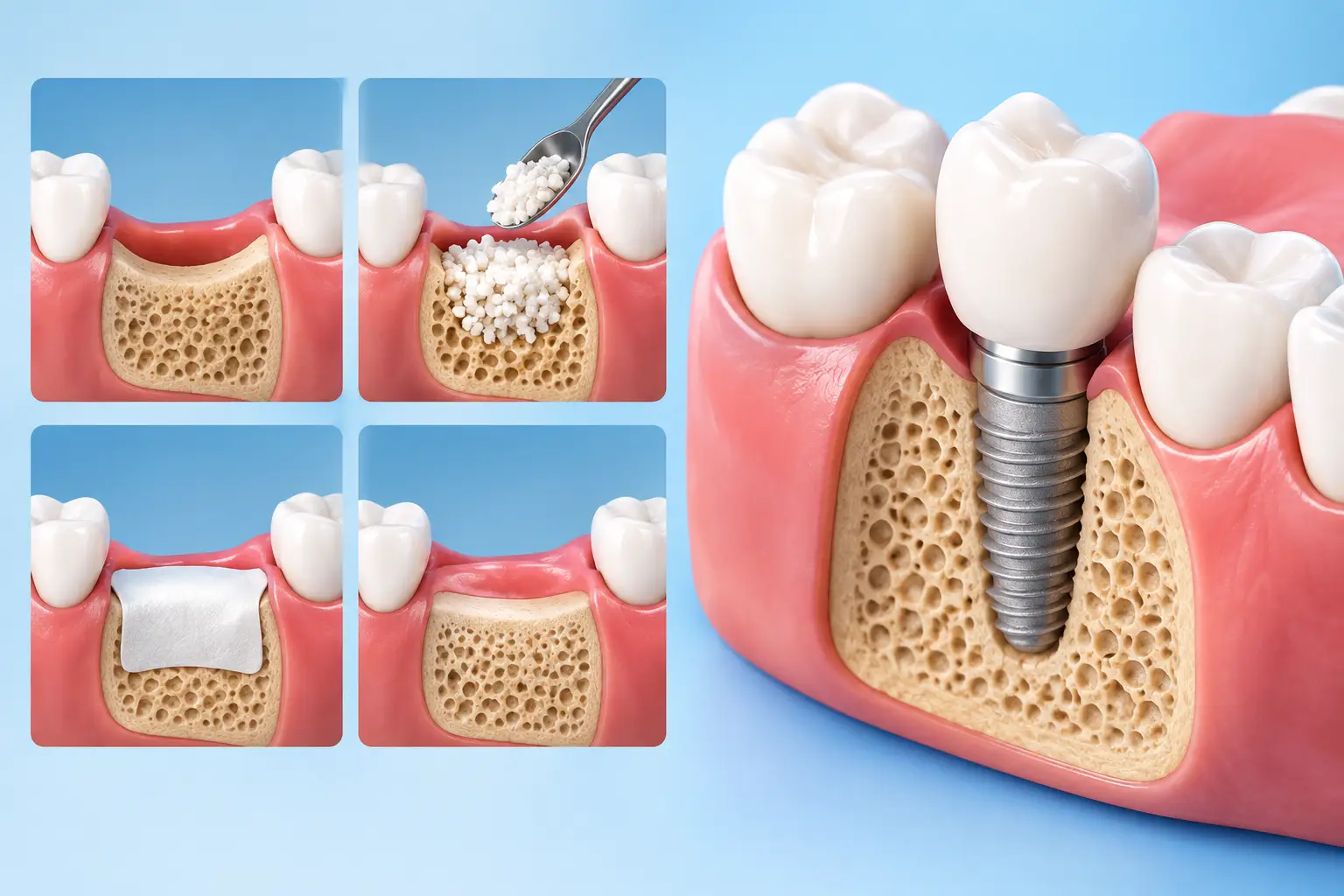
A missing tooth does not only leave a visible gap. Over time, the jawbone beneath it can shrink because it is no longer being stimulated by a tooth root. That can make placing a dental implant less straightforward. This guide to dental bone grafting explains what the procedure involves, when it may be recommended, and what to clarify before making plans for treatment abroad.
Bone grafting is not an automatic extra, nor is it something to accept without a clear explanation. The right decision depends on your scan, the site of the missing tooth, the quality of the remaining bone and the implant plan. Thinking it through is the first step.
What is dental bone grafting?
A dental bone graft adds or encourages bone in an area of the jaw where there is not enough volume to support an implant securely. The graft material acts as a framework. Over time, your body can form new bone around and through it, creating a stronger foundation for the implant.
For some people, a graft is carried out months before the implant is placed. In other cases, a small graft can be placed at the same appointment as the implant. The timing is a clinical judgement, not a travel-package decision. A clinician should be able to explain why they recommend a particular approach and what alternatives, if any, are suitable.
Why bone can be needed before an implant
The jaw begins to remodel after a tooth is lost or removed. The longer the gap has been present, the more likely there may be bone loss, although this varies considerably between patients. Gum disease, infection, trauma, poorly fitting dentures and previous surgery can also affect the available bone.
A three-dimensional CBCT scan is usually the key diagnostic tool. Standard X-rays can be useful, but they do not provide the same detail on bone width, height and nearby structures such as the sinus or nerve canal. A clinic should plan implant treatment from proper imaging, rather than estimating from photographs or a brief video call.
In the upper back jaw, the maxillary sinus can limit the height of bone available. In the lower jaw, the position of the nerve must be carefully assessed. These are reasons why experience, planning and the clinic's systems matter as much as the implant brand or the headline price.
The main types of dental bone graft
The phrase "bone graft" covers several procedures. They differ in scale, healing time and purpose.
Socket preservation
When a tooth is removed, graft material may be placed into the extraction socket to reduce the amount of bone that is lost during healing. This can make a future implant more predictable. It does not guarantee that no further grafting will be required, but it may reduce the need for it.
Guided bone regeneration
For a small local deficiency, graft material can be placed around the planned implant area and protected by a membrane. The membrane helps prevent soft tissue from growing into the space while bone heals. This is commonly used where the jaw is slightly too narrow or where a tooth has been missing for some time.
Block grafting
Where a larger amount of bone is needed, a clinician may use a shaped block of bone. This can be taken from elsewhere in the mouth or use a suitable processed material. It is a more involved procedure and often requires a longer healing period before implants can be placed.
Sinus lift
A sinus lift, also called sinus augmentation, is used in the upper back jaw when the sinus sits close to the mouth and there is insufficient bone height for an implant. The sinus membrane is carefully lifted and graft material is placed beneath it. Depending on the amount of existing bone, the implant may be placed at the same time or later.
The material itself may come from your own bone, a human donor source, an animal-derived source or a synthetic substitute. Each has a role, and the choice should be documented clearly. Ask what material is proposed, why it is appropriate in your case and whether the clinic uses traceable, regulated products.
What treatment and recovery can look like
Most grafting procedures are performed under local anaesthetic. Some patients may be offered sedation where appropriate, particularly for more extensive work or for those who are very anxious. You should receive pre-operative instructions and a written explanation of what medication, if any, is prescribed.
After treatment, swelling, bruising, tenderness and minor bleeding can be expected. These symptoms are usually most noticeable in the first few days. Soft food, careful oral hygiene and avoiding smoking are often advised. Smoking is particularly relevant because it can impair healing and increase the risk of complications.
Healing is not the same for every graft. A minor graft performed alongside an implant may have a different timetable from a sinus lift or block graft. In broad terms, clinicians often allow several months for graft maturation before the next stage, but only a review and follow-up scan can confirm whether the bone is ready.
This has a practical implication for overseas care: dental implant treatment involving grafting may require more than one trip. Be cautious of any plan that promises a permanent final tooth on a single short visit without first assessing the scan, the bone and your individual risk factors. A temporary tooth may be possible in some cases, but it is not appropriate for everyone.
Questions to ask before agreeing to treatment
A good plan should leave you clearer, not rushed. Before committing, ask whether the graft is essential or simply one option; whether the implant can be placed at the same appointment; how many visits are likely; and what happens if the graft does not heal as expected.
You should also receive an itemised quotation. It should distinguish the extraction, scan, graft material, membrane, implant surgery, abutment, temporary restoration, final crown and any sedation or medicines. "Implant package" can mean very different things from one provider to another.
For treatment in Turkey, clarify how records will be shared with you and what support is available once you are home. You may need to show your UK dentist the scan report, implant details and treatment notes in the future. Keep copies rather than relying on a verbal account of what was done.
Planning treatment abroad carefully
Lower private treatment costs can make overseas implant care worth considering, but a bone graft is not a procedure to arrange around flight deals. The clinic needs to be suitable for surgical dentistry, have appropriate imaging and sterilisation processes, and provide a plan that is clinically realistic for your available time.
It also helps to have one person coordinating the details. Meditrust matches patients with accreditation-checked clinics after reviewing the treatment need, not simply the treatment requested. That means asking whether the proposed timing works, whether a graft changes the number of trips, and whether the quote reflects every planned stage.
If you are offered an in-person consultation with a visiting dentist, use it well. Bring recent X-rays if you have them, details of medical conditions and medication, and a list of questions. A £100 holding deposit for a consultation should be clearly explained and deducted from treatment costs if you proceed, rather than appearing later as an unexpected charge.
When to contact the clinic after a graft
Minor discomfort is expected, but worsening pain after initial improvement, persistent heavy bleeding, fever, significant swelling, numbness that does not settle or discharge with a bad taste should be reported promptly. Do not wait until your planned flight home if you are still abroad.
Once back in the UK, follow the clinic's written aftercare instructions and attend any recommended local checks. A coordinator can help maintain communication, but urgent symptoms need clinical assessment from the treating provider or an appropriate local dental or medical service.
The most reassuring implant plan is not necessarily the quickest one. It is the one built from proper scans, clear stages, honest timeframes and a clinic that remains accountable after the treatment chair is empty.
Already have a quote or a photo of your smile?
Send it to us on WhatsApp for an honest, confidential second opinion from our Dorset team. Free, and no obligation.
Work out your own cost with our Turkey teeth cost calculator
Prefer the full form? Start your enquiry