
Smoking Implant Healing: What Patients Need to Know
By Meditrust Team · Published
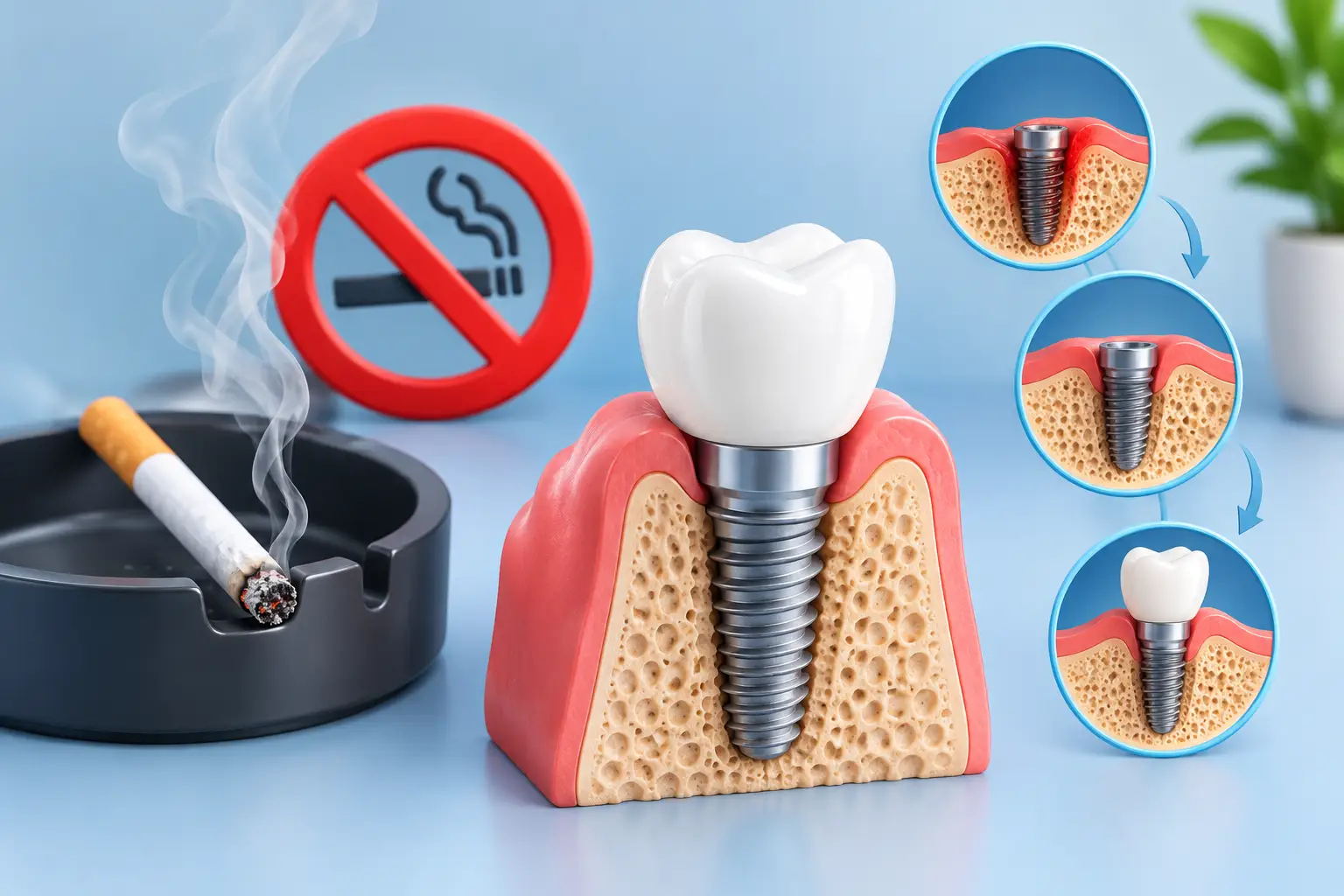
A dental implant can look straightforward on a treatment plan: remove a failing tooth, place the implant, allow it to heal, then fit the final crown. Smoking implant healing is where that plan becomes less predictable. Nicotine, smoke and heat can all affect the blood supply and tissues your implant needs to settle properly.
That does not mean every smoker will lose an implant, or that a successful result is impossible. It does mean the risk is higher, the healing period needs more care, and your dentist should know your smoking or vaping habits before treatment is agreed. A good clinic will discuss this plainly, rather than treating it as an awkward detail to overlook.
Why smoking affects implant healing
An implant relies on a process called osseointegration. In simple terms, the jawbone needs to grow closely around the implant surface so it becomes stable enough to support a tooth. Healthy gums and a reliable blood supply matter throughout this process.
Smoking restricts blood vessels and reduces the oxygen available to healing tissues. It can also affect the body's inflammatory response and ability to fight infection. The result may be slower gum healing, poorer bone integration and a greater chance of infection around the implant site.
The issue is not only the cigarette itself. Tobacco smoke contains chemicals that irritate the mouth, while the act of smoking creates heat and suction around a fresh surgical area. Smoking can also leave the mouth drier and make plaque control harder. For someone who has had bone grafting, a sinus lift or several implants placed, the potential impact can be more significant because there is more healing to protect.
Does smoking mean you cannot have dental implants?
Not necessarily. Many smokers are assessed as suitable for implants and go on to have functioning restorations. But suitability depends on the full clinical picture: how much you smoke, the condition of your gums and bone, whether you have gum disease, your medical history, bite forces and the complexity of the planned treatment.
A single implant in a healthy mouth is different from a full-arch restoration after extensive extractions and grafting. Your dentist may recommend treating gum disease first, allowing more healing time, changing the treatment sequence or discussing alternatives if the risks are too high.
What should not happen is a guarantee. Implants can fail even in ideal circumstances, and smoking raises the likelihood of complications. A careful provider will explain the trade-off between proceeding now and reducing or stopping nicotine use before surgery. The decision should be based on informed consent, not pressure to accept a quick treatment date.
The most sensitive times to avoid smoking
The period immediately after implant surgery is particularly important. A fresh site needs a stable blood clot and undisturbed soft-tissue healing. Smoking shortly after surgery can interfere with both, and it may increase discomfort and infection risk.
Your surgeon should give you a specific timeframe based on your procedure. This may differ if you have had an extraction at the same appointment, stitches, a graft, sedation or a larger full-mouth treatment. Do not rely on a general rule from social media or another patient's experience. Ask your own clinician exactly when they want you to stop before surgery and when they consider it safe to resume.
Longer-term reduction or stopping still matters. Implant integration continues well beyond the first few days, and smoking remains associated with gum inflammation and bone loss around implants over time. The final crown being fitted is not the end of maintenance.
What about vaping, nicotine pouches and nicotine replacement?
It is understandable to look for a substitute during the healing period, especially if smoking is part of your daily routine. However, vaping is not automatically risk-free for implant healing. Nicotine itself can restrict blood flow, and vapour and heat may irritate healing tissues. The evidence base is still developing, but many implant clinicians will advise avoiding vaping around surgery rather than assuming it is a safe workaround.
Nicotine pouches can also expose the gums to nicotine, particularly if placed near the surgical area. They should not be used without discussing them with your clinician.
Nicotine replacement therapy, such as patches, gum or lozenges, is more nuanced. It may be a useful part of a stop-smoking plan because it avoids tobacco smoke, but it still involves nicotine. Your implant dentist, GP, pharmacist or local stop-smoking service can help you weigh up the safest route. The key point is to be honest about what you use. A clinician can plan around clear information; they cannot protect a healing site from details they have not been told.
Practical steps that protect your implant
Good healing is not only about avoiding cigarettes. Follow the post-operative instructions supplied by your surgeon, including guidance on medication, mouth rinsing, brushing and food. Do not assume that vigorous cleaning is better during the first days. A surgical area needs to be kept clean in the way your clinician has advised, without being traumatised.
Choose softer foods while you are told to do so and avoid chewing directly on the implant area. If you have a temporary tooth or bridge, use it exactly as instructed. Putting excessive pressure on an implant before it has integrated can affect the outcome, especially when several teeth have been replaced.
Watch for increasing swelling after the expected early period, worsening pain, persistent bleeding, a bad taste, discharge, fever, a loose implant or a loose temporary restoration. These do not always mean failure, but they do need prompt clinical advice. Do not wait until you return for a planned review if something feels wrong.
If you are travelling abroad for treatment, this point deserves extra planning. Ask before you book what aftercare is included, who you contact outside clinic hours, how long you should remain locally after surgery, and what support is available once you are back in the UK. The clinic matters as much as the surgeon, and aftercare arrangements should be clear before treatment begins.
Questions to ask before committing to treatment
Smoking should be part of your consultation, not a box ticked on a medical form. Ask whether your current smoking level changes the proposed treatment plan, whether grafting is likely, and what the clinic's protocol is for smoking cessation before and after surgery. It is also reasonable to ask how they monitor healing and what happens if integration is delayed or an implant does not take.
For overseas dental care, request an itemised plan that separates surgery, temporary teeth, final restorations, grafting where required, scans, medication and follow-up. Lower initial prices can look appealing, but they are not a substitute for a clear plan or a named person who can coordinate questions across the journey.
Meditrust helps patients think through clinic standards, treatment planning, travel timing and UK-based continuity before they commit. That is particularly valuable when an implant case has added risk factors, such as smoking, and decisions should not be rushed.
A realistic approach to smoking and implants
The best time to discuss stopping or reducing smoking is before your implant appointment is booked, not while you are recovering in a hotel room after surgery. Even a temporary pause can support healing, but the right plan depends on your health, nicotine use and the treatment being carried out.
Be candid with your dentist, follow the instructions designed for your case and make room in your travel plans for proper recovery. An implant is intended to last for years. Giving its healing period the attention it needs is one of the most practical ways to protect that investment.
Already have a quote or a photo of your smile?
Send it to us on WhatsApp for an honest, confidential second opinion from our Dorset team. Free, and no obligation.
Work out your own cost with our Turkey teeth cost calculator
Prefer the full form? Start your enquiry