
Implants Versus Bridges: Which Suits You?
By Meditrust Team · Published
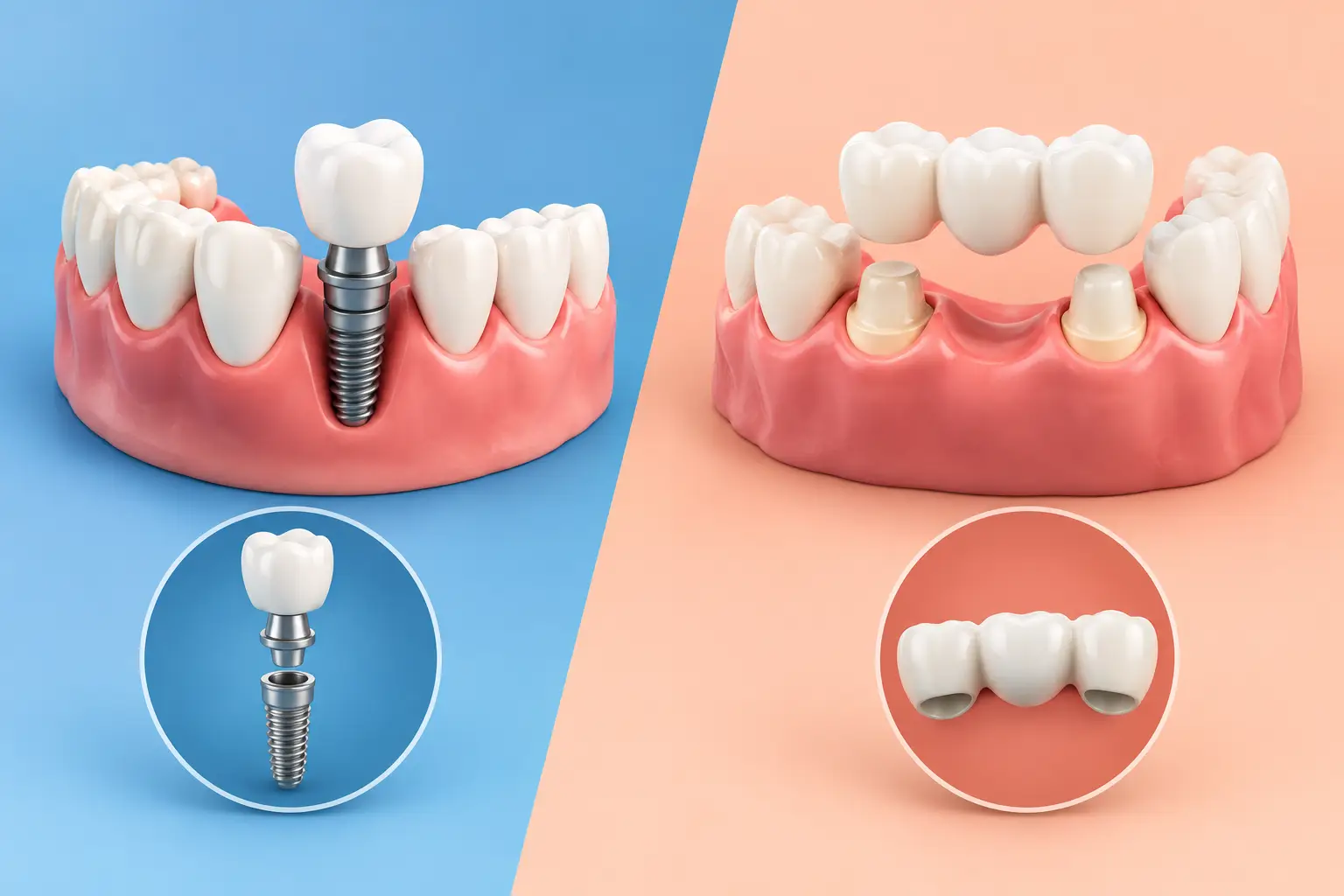
A missing tooth can change more than a smile. It can make you chew on one side, avoid certain foods or feel self-conscious in photographs. When comparing implants versus bridges, the right answer is rarely the one with the lowest upfront figure. It is the option that fits your mouth, your existing teeth, your health and the level of treatment you are prepared for.
Both treatments can restore function and appearance very well. The difference lies in how they are supported, how they affect neighbouring teeth and what they ask of you during planning and recovery.
Implants versus bridges: the practical difference
A dental bridge replaces a missing tooth by attaching an artificial tooth, known as a pontic, to the teeth beside the gap. In a conventional bridge, those neighbouring teeth are shaped to hold crowns that support the replacement tooth. A resin-bonded bridge, sometimes called a Maryland bridge, is a more conservative option in suitable cases and is bonded to the back of an adjacent tooth.
A dental implant is a small titanium post placed into the jawbone to replace a tooth root. After the implant has integrated with the bone, a crown is fitted on top. It stands independently rather than relying on the teeth either side.
That distinction matters. A bridge may be the sensible route where adjacent teeth already need crowns, where surgery is not appropriate, or where a faster fixed replacement is preferred. An implant can be attractive when the neighbouring teeth are healthy and untouched, and when preserving bone in the area is a priority.
Neither is automatically better. A good recommendation starts with a clinical examination, X-rays and, for implant planning, appropriate 3D imaging where indicated. It should not start with a blanket package or a promise made from a photograph alone.
When an implant may be the stronger choice
An implant does not require a dentist to reduce healthy neighbouring teeth. For many people, this is its clearest advantage. It can also help maintain the bone around the missing tooth area because the implant transfers chewing forces into the jaw.
Implants are often considered for a single missing tooth, several separate gaps, or to support a larger restoration. With careful planning and good home care, they can offer a long-term solution. However, “long-term” is not the same as permanent. The crown may need replacing over time, and the tissues around an implant still need regular cleaning and professional monitoring.
Implant treatment also has more stages. The tooth may need to be removed first, then the site may need time to heal. Some patients require bone grafting if there is not enough healthy bone to support the implant. Once placed, the implant needs a healing period before the final crown is fitted, although timing varies significantly between cases.
Smoking, untreated gum disease, uncontrolled diabetes, teeth grinding and certain medications can affect suitability or increase risk. These factors do not always rule out implants, but they make honest assessment and a clear maintenance plan essential.
When a bridge can make more sense
A bridge can be an excellent restoration, particularly when the teeth either side of the gap already have large fillings, older crowns or damage that would benefit from coverage anyway. In that situation, preparing those teeth may be clinically reasonable rather than an unnecessary sacrifice.
Treatment is usually quicker than an implant pathway. Once the supporting teeth are prepared and the bridge is made, it can often be fitted without surgical treatment or a prolonged healing phase. For someone who needs a fixed solution but is not suitable for an implant, this can be a major benefit.
A bridge also avoids the surgical element of implant placement. That can matter to people with relevant medical considerations, limited bone, severe dental anxiety around surgery, or a preference to keep treatment simpler.
The trade-off is that a conventional bridge depends on the health of its supporting teeth. If decay, gum disease or a problem develops around one of them, the whole bridge may be affected. Cleaning underneath the replacement tooth also takes practice. Your dentist or hygienist should show you how to use interdental brushes, floss threaders or other suitable aids.
Longevity, maintenance and the hidden value of planning
It is tempting to compare one quote for an implant against one quote for a bridge and choose from there. That does not show the full picture. A bridge may have a lower initial cost, while an implant may preserve adjacent teeth and avoid future treatment on them. Equally, an implant plan involving grafting, temporary teeth and multiple visits may not be the most proportionate option for every gap.
The quality of diagnosis has a real bearing on value. A poorly planned implant can lead to problems with bite, gum levels, cleaning access or appearance. A bridge that ignores decay or gum inflammation on its supporting teeth may fail sooner than expected. The restoration is only one part of the decision. The condition of the teeth, gums and bone underneath it matters just as much.
Ask how the proposed treatment will be maintained, what is included in the quotation, and what would happen if further work becomes necessary. A transparent plan should distinguish between scans, extractions, temporary restorations, grafting where needed, the final restoration and any recommended review appointments.
Appearance and bite: details that should not be rushed
Both options can look natural when they are designed well. The shade, shape, bite and gum contours need attention, particularly for a front tooth. An implant crown should be positioned to support an attractive result without compromising cleaning or the neighbouring roots. A bridge needs enough support and a natural emergence from the gumline.
If you grind your teeth, clench at night or have an uneven bite, raise this before treatment begins. A protective night guard may be recommended after either an implant crown or bridge. Ignoring bite forces can shorten the life of an otherwise well-made restoration.
For visible teeth, it is reasonable to ask to see how temporary teeth will be managed and when the final shade selection will take place. A fast answer is not always a reassuring one. Good cosmetic outcomes come from planning, communication and time for the gums to settle where required.
Choosing treatment abroad without cutting corners
Turkey can offer access to private dental treatment at a lower cost than many UK patients expect at home, but the decision should never be based on price alone. Implant systems, laboratory standards, clinical records, sterilisation processes and aftercare arrangements vary between providers.
Before travelling, you should have a written treatment outline rather than a vague promise of “implants included”. It should explain how many implants are planned, the type of final restoration, whether extractions or grafting are anticipated, how long you are expected to stay, and whether a temporary tooth is included. It should also make clear that the plan can change after an in-person examination and imaging.
The clinic matters as much as the dentist. Look for evidence that the provider has been properly checked, that you can communicate clearly with the clinical team, and that there is a route for support once you are back in the UK. For staged implant treatment, travel planning is particularly important because the final crown may be fitted on a later visit.
Meditrust coordinates patients with accreditation-checked clinics and keeps one named coordinator involved from early planning through UK aftercare. That continuity can be helpful when you are comparing complex plans, arranging appointments and trying to understand exactly what your quotation covers.
Questions worth asking before you decide
A useful consultation should leave you clearer, not pressured. Ask whether the neighbouring teeth are healthy, whether you have enough bone for an implant, and what the dentist would choose if this were their own mouth. Ask what alternatives have been considered, including a removable option if it is relevant.
You should also ask about the expected number of visits, the healing period, the materials being used and how complications are handled. If a provider recommends extracting teeth that could be retained, request a clear clinical explanation. Replacing a tooth is sometimes necessary; removing a restorable tooth merely to simplify a package should prompt further questions.
The best choice is the one you can understand, maintain and feel comfortable committing to. Take the scan findings, the condition of the surrounding teeth and the practical realities of travel seriously. Thinking it through is the first step towards a result that still feels right years from now.
Already have a quote or a photo of your smile?
Send it to us on WhatsApp for an honest, confidential second opinion from our Dorset team. Free, and no obligation.
Work out your own cost with our Turkey teeth cost calculator
Prefer the full form? Start your enquiry