
Compare Implant Materials Before You Commit
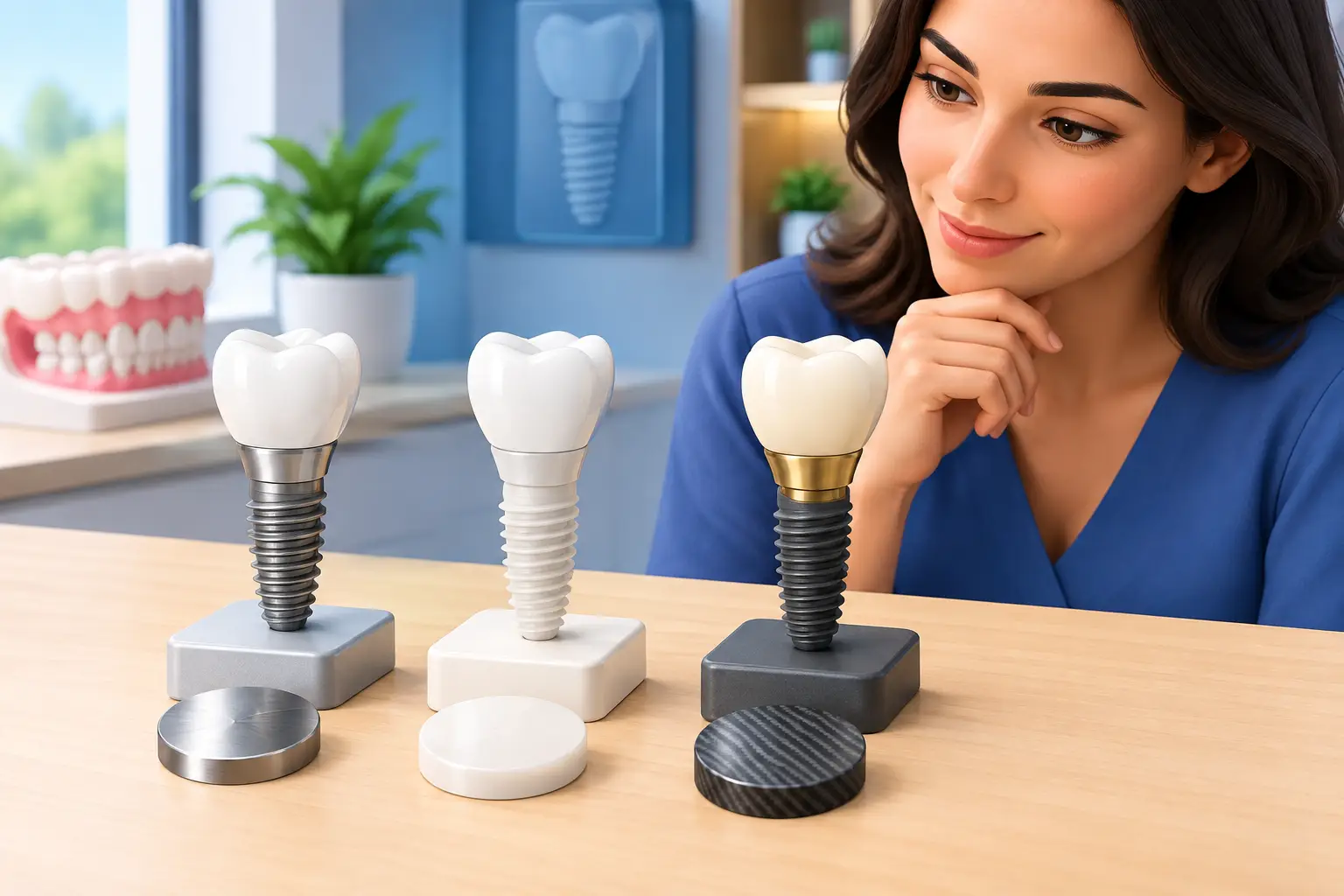
A dental implant quote can look reassuringly simple: implant, abutment and crown, with one price beside it. But when you compare implant materials, those three words need unpacking. The material of the implant body is only one part of the decision; the crown, connecting component, clinical plan and traceability of every part matter too.
For anyone travelling abroad for implant treatment, this is not a detail to leave until you are in the dental chair. You should know what is being proposed, why it suits your case and whether the quoted system can be identified and serviced later in the UK if needed.
What an implant is actually made of
A completed implant restoration usually has three main components. The implant fixture is the small post placed in the jawbone. The abutment connects that post to the visible tooth. The crown is the tooth-shaped restoration you see when you smile and chew.
When people ask about implant materials, they are often asking about the fixture. Yet the abutment and crown affect appearance, strength and maintenance as well. A clinic should explain the whole restoration, not simply say that it uses a particular implant brand.
There is no single best material for every person. Bone volume, bite forces, gum thickness, the position of the tooth, allergies or sensitivities, oral hygiene and the look you want all influence the recommendation. Good planning begins with imaging and an assessment of your mouth, rather than a fixed package offered before anyone has seen your scans.
Compare implant materials: titanium and zirconia
Titanium implants
Titanium is the established material for dental implant fixtures. It has a long clinical history and is widely used because it is strong, relatively light and designed to integrate with bone. Most titanium fixtures are made from commercially pure titanium or titanium alloys, depending on the implant system and its design.
One practical advantage is familiarity. Titanium systems are used globally, and established manufacturers typically offer a broad range of components for different clinical situations. If an implant needs a replacement crown, screw or abutment years later, a documented, widely supported system may make that process more straightforward.
Titanium is grey in colour. In most cases it sits well below the gum line and is not visible. However, where gums are very thin or have receded, a darker shade may sometimes affect the appearance around the front teeth. This is one reason a dentist may discuss the choice of abutment material as well as the fixture itself.
Patients sometimes ask whether titanium is suitable if they have had reactions to jewellery or metal. A reaction to nickel, for example, does not automatically mean titanium is unsuitable. Do not make that judgement from an online checklist. Tell the clinician about any diagnosed allergies, previous reactions and relevant medical history so they can advise properly.
Zirconia implants
Zirconia is a ceramic material. It is tooth-coloured and metal-free, which can appeal to people concerned about metal exposure or the appearance of dark material beneath thin gum tissue. It also has a different surface and design profile from titanium systems.
The trade-off is that zirconia implants have a shorter and narrower body of long-term clinical evidence than titanium, although evidence and designs continue to develop. They may not be suitable for every jaw position, bite pattern or restorative plan. Some zirconia systems also offer fewer component options, which can matter if complex adjustments are needed later.
Zirconia can be a sensible discussion in selected cases, but it should not be presented as automatically safer, more natural or better than titanium. Ask why it is recommended for your mouth in particular, and what the dentist sees as its benefits and limitations.
The crown material matters just as much
The visible crown is not usually made from the same material as the implant fixture. Common options include zirconia, porcelain bonded to metal and lithium disilicate ceramic. Each can have a place in treatment.
Zirconia crowns are valued for strength and are commonly used in back teeth, where chewing forces are high. Modern layered zirconia can also provide an attractive result in visible areas, though the right degree of translucency needs careful planning. A very opaque crown may not match neighbouring natural teeth as convincingly as a more aesthetic ceramic in some situations.
Lithium disilicate can provide excellent light transmission and natural-looking detail, particularly for front teeth. It is not automatically the right choice where very high bite forces or limited space make a stronger material preferable. Porcelain bonded to metal remains a proven option in some cases, but the metal substructure can be a consideration where gums are thin or aesthetics are especially demanding.
The material should follow the clinical need. A back molar and a front incisor do different work, and they are seen differently when you smile. A careful dentist will consider both function and appearance rather than applying one crown type to every tooth.
Do not confuse an implant brand with a material
A recognised implant manufacturer and an implant material are not the same thing. Several reputable manufacturers make titanium fixtures, but their connection types, screw designs, instruments and replacement components may differ. The question is not only, “Is it titanium?” It is also, “Which system is it, and can it be identified later?”
Avoid vague wording such as “European implant” or “premium implant” without a named manufacturer and documented product details. Price alone does not tell you whether the implant system is appropriate, genuine or supported over time.
Before treatment, ask for the proposed implant brand and model where available, the materials for the fixture, abutment and crown, and whether the quote includes all components. Following placement, you should receive an implant passport or equivalent record showing the system used, lot details where supplied and treatment dates. Keep this with your dental records.
Questions worth asking before you travel
A clear consultation should leave you with answers, not more terminology to decode. These questions are reasonable to ask before agreeing to treatment:
- Which implant system, fixture material, abutment material and crown material are included in my plan?
- Why is this combination suitable for the position of my tooth, my bone level and my bite?
- Does my quote include scans, extraction if needed, bone grafting, temporary teeth, the final crown and any additional appointments?
- What records will I receive for my own dentist, and what happens if I need an adjustment after I return to the UK?
It is also sensible to ask whether the treatment will be completed in one visit or staged over several months. An implant may need time to integrate with the bone before the final crown is fitted. Immediate teeth are sometimes possible, but they are not suitable in every case and should not be promised without proper assessment.
Why planning and follow-up protect the result
The right material cannot compensate for poor case selection, inadequate hygiene standards or rushed placement. The clinic matters as much as the surgeon. Proper planning may involve a clinical examination, X-rays or a CBCT scan, gum assessment and a review of whether you grind your teeth, smoke or have health conditions that could affect healing.
If bone grafting or sinus work is proposed, ask why it is needed, what material is being used and whether it changes the treatment timeline. If it is not proposed, ask how the available bone has been assessed. Neither answer should be treated as a sales point. It is a clinical decision that needs a clear explanation.
Aftercare also deserves the same attention as the treatment itself. Implants need ongoing cleaning and review, just like natural teeth. Gum inflammation around implants can become serious if ignored. A night guard may be advised for people who clench or grind, and smoking can affect healing and long-term outcomes.
For patients arranging care abroad, a named coordinator can help ensure that the written plan, itemised quote, clinic details and travel timings are understood before departure. At Meditrust, the aim is to help patients get matched, not sold to, with clinic standards and continuity of contact considered alongside cost.
A well-chosen implant plan should feel explainable in ordinary language. Take the quote away, compare like with like, and do not be rushed by a time-limited offer. The most useful question is often the simplest one: can the clinic clearly show you what will be placed in your mouth, why it has been chosen and how you will be supported afterwards?
Talk it through with us
Initial advice is free. A named coordinator will answer your questions.
Start your enquiry