
How to Choose Implant Shade for a Natural Smile
By Meditrust Team · Published
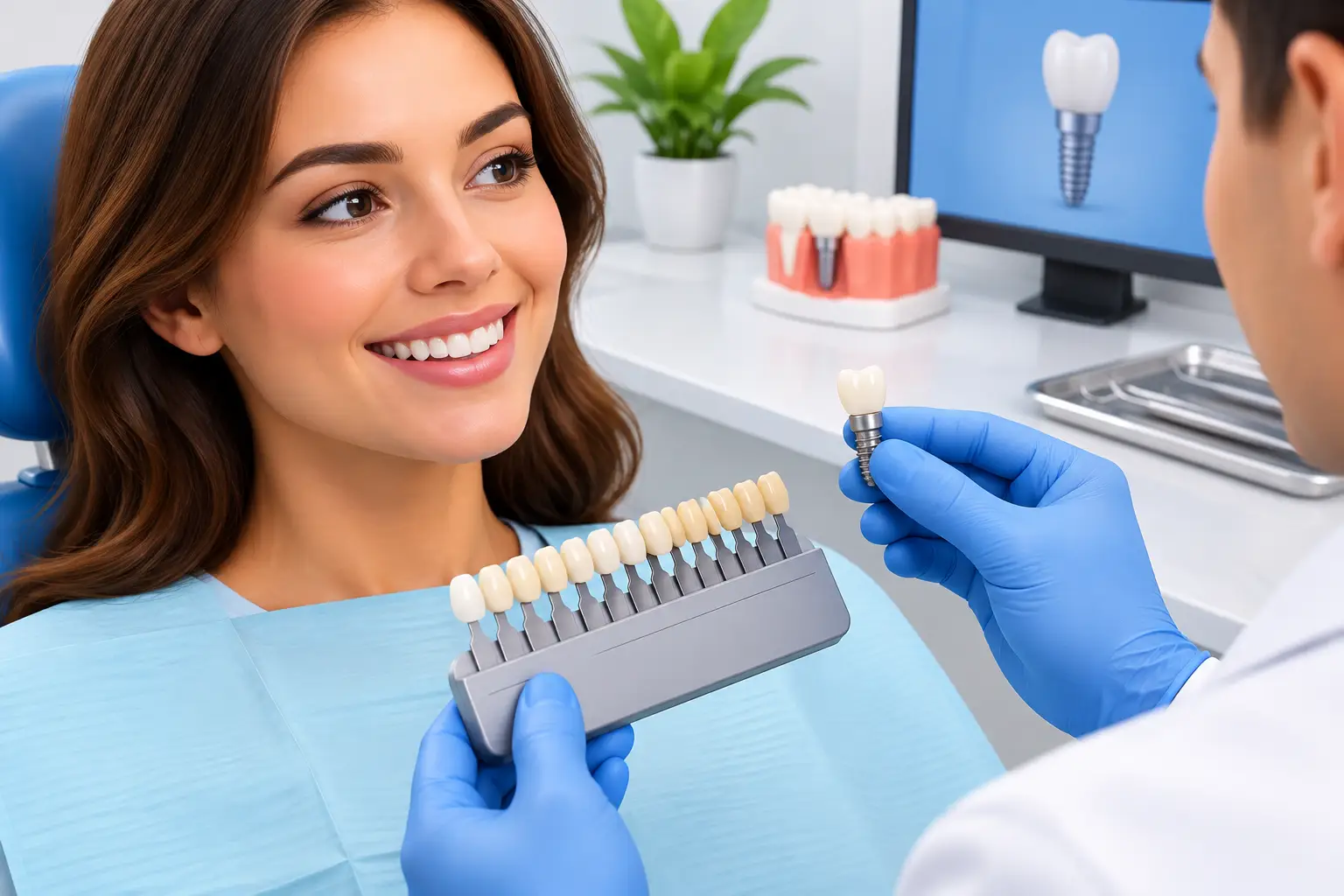
A dental implant is not given a shade in the same way as a natural tooth. The shade choice relates to the visible crown or bridge fitted on top of it. Knowing how to choose implant shade means looking beyond the whitest option and planning a result that belongs naturally in your smile, both now and years from now.
This decision deserves time. A crown that is technically well made can still draw attention for the wrong reasons if it is too bright, too grey, too opaque or simply different from the teeth around it. That is particularly relevant when treatment takes place abroad, where the planning appointment, laboratory work and fitting schedule must all allow enough time for careful checks.
Start with the teeth that will stay
For a single implant, the neighbouring teeth are usually the best reference point. Your dentist will assess more than their basic lightness or darkness. Natural teeth have changes in colour from the gumline to the biting edge, small areas of translucency and tiny variations that stop a smile looking flat.
The aim is not necessarily to copy every mark or stain. It is to create a crown that sits comfortably among the teeth you are keeping. A very uniform, brilliant-white crown beside older natural teeth may look less convincing than a slightly warmer, more layered shade.
Front teeth need particularly close attention because they are seen when you speak and smile. For a back tooth, where appearance still matters but is less visible, the balance may lean more towards strength, function and an accurate fit. The position of the implant changes the conversation, so avoid accepting a one-size-fits-all recommendation.
Choose implant shade after whitening, not before
If you plan to whiten your natural teeth, discuss this before the final implant crown is made. Whitening can change the colour of enamel, but it will not lighten ceramic crowns, bridges or composite fillings already in the mouth.
The sensible sequence is usually to complete whitening first, allow the tooth colour to settle, then select the final implant shade. Choosing the crown first and whitening afterwards can leave you with a crown that appears darker than the teeth around it.
There are exceptions. If a missing front tooth needs an immediate temporary replacement, a temporary crown may be used while the gum heals and the rest of the smile is planned. The permanent crown can then be made once the shade is stable. Your dentist should explain clearly whether you are approving a temporary or final restoration.
Check the shade in more than one light
Teeth do not look identical under every light source. A shade that seems right under bright clinical lighting can look cooler in daylight or warmer at home. Good shade selection is therefore a practical process, not a quick glance at a shade tab.
A dentist may compare shades in natural-looking light, take calibrated photographs and involve the dental laboratory in the decision. They will also look at the tooth while it is clean and not dehydrated. Teeth can appear temporarily lighter after prolonged mouth opening or dental work, which can lead to an unhelpful match if the assessment is rushed.
Bring your own view into the appointment. If you are concerned that a suggested shade looks too white, too yellow or too grey, say so before the laboratory starts the final work. A photograph of your natural smile from several years ago can sometimes help, especially where you want to restore rather than redesign your appearance.
Think about the material, not just the colour
Two crowns with the same shade code may not look the same. Their appearance is affected by the ceramic used, its thickness, the colour beneath it and how light passes through the restoration.
Implant crowns often need a degree of opacity to mask the implant components underneath. This can be more challenging in the front of the mouth, particularly where the gums are thin or the surrounding teeth are very translucent. Your clinician and laboratory may recommend particular ceramic or abutment materials to balance a natural appearance with durability.
The gumline also matters. If gums have receded, or if there is limited space and a darker underlying component could show through, the case may need additional planning. This is not a reason to assume a poor result. It is a reason to ask direct questions about what is realistic in your own mouth.
How to choose implant shade for several teeth
When replacing several teeth, or planning a full-arch implant bridge, the choice is less about matching one neighbouring tooth and more about designing a smile that suits your face, complexion, lip movement and preferences.
A lighter shade can look fresh and can be a good choice for some people. It is not automatically the most natural choice. Extremely bright shades can look artificial, especially if lower natural teeth remain noticeably darker. Equally, choosing a very subdued shade simply because it matches worn teeth may not reflect what you want from treatment.
This is where a trial smile, digital preview or provisional bridge can be useful. It gives you and the clinical team a chance to consider tooth shape, length, position and shade together. Colour alone cannot solve a smile that feels too bulky, too square or out of proportion with your face.
For a full arch, ask whether you will see and approve a try-in before the final bridge is completed. Ask what changes can still be made at that stage, and whether the quote includes provisional work, laboratory modifications and follow-up appointments. Clear answers protect you from making a rushed choice on the day of fitting.
Do not rely on edited photographs or a WhatsApp promise
Photos are useful for early discussion, but phone cameras, filters, indoor lighting and screen settings can distort tooth colour. A clinic cannot reliably promise an exact final shade from a selfie alone.
Before travelling, your treatment plan should state what is being replaced, whether you will receive temporary teeth, how long the laboratory stages take and when the final shade will be confirmed. If the plan involves a complex smile makeover, check that your stay allows room for reviews rather than assuming every decision can be completed in one appointment.
The clinic matters as much as the dentist. Shade selection involves the dentist, technician, materials and quality control, not just a shade chart held against your teeth. For patients arranging treatment in Turkey, Meditrust looks for clinics with established laboratory processes, clear treatment planning and continuing patient feedback, rather than treating cosmetic choices as an afterthought.
Questions worth asking before you approve the final crown
You do not need dental training to ask sensible questions. Confirm whether the shade is being matched to your current teeth or your planned post-whitening shade. Ask to see the crown beside the neighbouring teeth before it is finally fitted, where clinically appropriate, and ask whether it has natural characterisation rather than a single flat colour.
If you are replacing a front tooth, ask how the clinician will manage translucency and the appearance near the gumline. If several teeth are being restored, ask whether you can assess a temporary version before the final ceramics are made. And if you feel uncertain, ask for the decision to be paused. A final crown is intended to remain in place for many years, so a few extra minutes of discussion is worthwhile.
Give yourself permission to prefer natural over white
The best implant shade is the one that works with your face, your remaining teeth and the type of smile you genuinely want to live with. It may be bright, but it should not have to shout. Careful planning, an honest conversation and enough time to review the result are far more valuable than picking the whitest square on a shade guide.
Already have a quote or a photo of your smile?
Send it to us on WhatsApp for an honest, confidential second opinion from our Dorset team. Free, and no obligation.
Work out your own cost with our Turkey teeth cost calculator
Prefer the full form? Start your enquiry