
Hair Restoration: Plan Treatment Safely
By Meditrust Team · Published
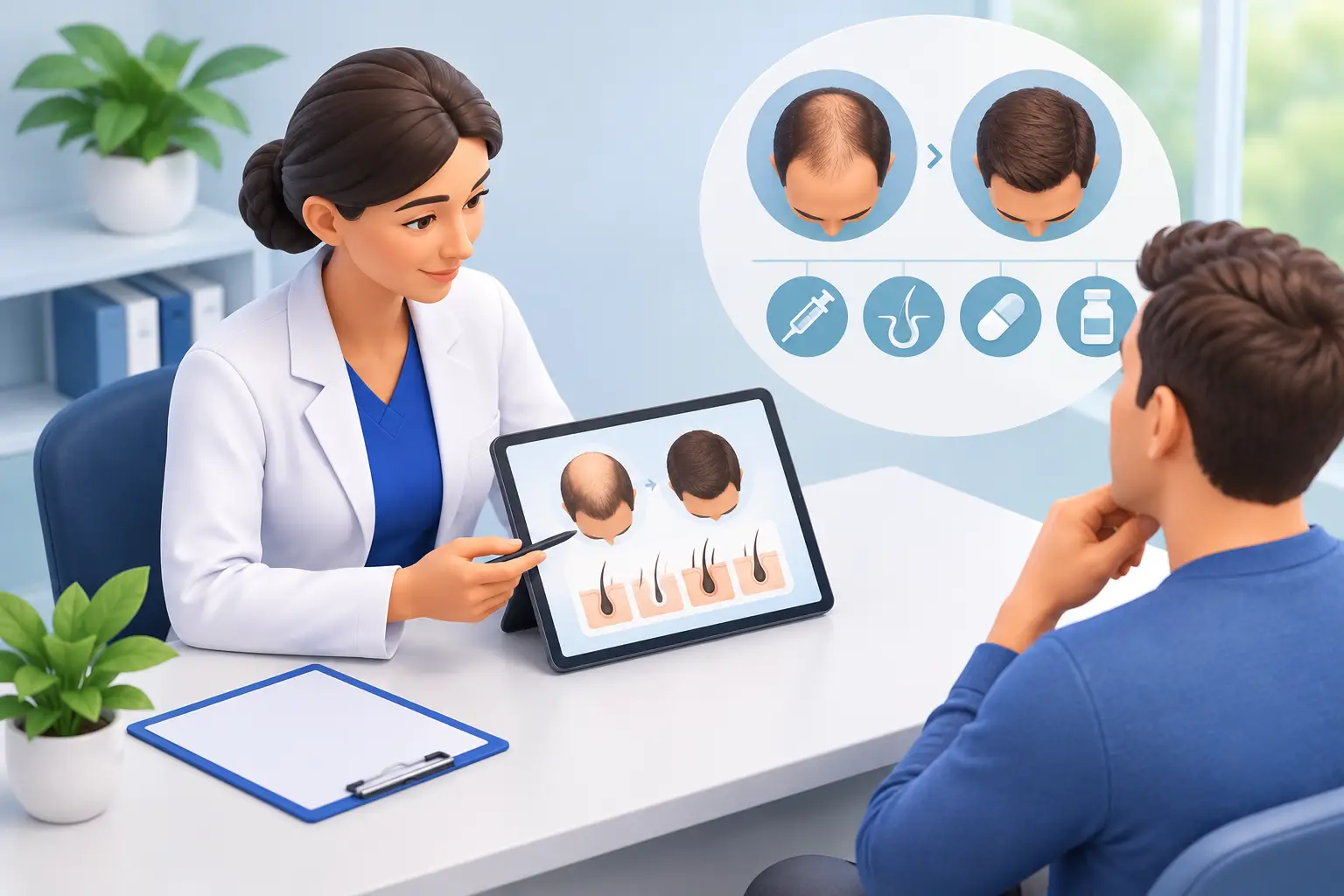
A hair transplant is not a haircut you can judge on the day. The outcome develops over months, depends on the health and supply of your donor area, and can be difficult to correct if the original plan was poor. That is why hair restoration should begin with careful assessment, not a social-media offer or a headline price.
For UK patients considering treatment in Turkey, the appeal is understandable. Private treatment can be more accessible than at home, and Turkey has a large, experienced hair-transplant sector. But quality varies. The surgeon matters, certainly, yet so do the clinic’s standards, the team carrying out each stage, the treatment plan and the support available once you are back in the UK.
Start with the cause of hair loss
Hair loss is not one condition. Pattern hair loss is common in men and women, but thinning can also be linked to illness, stress, medication, hormonal change, nutritional deficiency, scalp conditions or traction from tight hairstyles. A transplant will not necessarily be the right first step, particularly when hair loss is sudden, patchy or still changing quickly.
A proper assessment should look at your medical history, age, family pattern of loss, current medication and expectations. It should also consider whether you have enough stable donor hair at the back and sides of the scalp. That donor area is finite. Hair moved from it does not create new supply, so taking too much too soon may leave it visibly thin and limit options later.
For some people, non-surgical management may be appropriate before surgery or alongside it. This could include prescription treatment, depending on suitability, or clinical therapies offered by a qualified provider. Be wary of anyone who presents one procedure as the answer for every type of thinning. Good advice sometimes means waiting, investigating the cause or deciding that surgery is not right at all.
What a hair restoration plan should include
The most useful plans are specific. Rather than promising a certain number of grafts before reviewing clear photographs or speaking with you properly, a clinic should explain what it is proposing and why.
A sensible plan usually covers the hairline design, the areas to be treated, an estimated graft range, the method proposed and the likely density that can be achieved safely. It should also explain the limitations. A transplanted hairline can look natural, but it cannot always recreate the density you had as a teenager, especially where hair loss is advanced.
FUE is widely used and involves removing individual follicular units from the donor area before placing them in thinning areas. Variations in how grafts are extracted or implanted are often heavily marketed, but the label alone does not tell you whether the treatment is suitable or well performed. Ask who will design the hairline, make the recipient channels, extract grafts and implant them. The answer should be clear, not vague.
It is also worth discussing future loss. Transplanted hair may be long-lasting, while the native hair around it can continue to thin. Without a plan for that possibility, an isolated transplanted area may look unnatural over time. A conservative hairline and a realistic approach to density often protect the result better than an aggressive design.
Choosing a clinic in Turkey: look beyond the package
Turkey has clinics with strong teams and established systems, as well as high-volume operations built around speed. The difference is not always obvious from polished photographs. Before committing, you need to know who is responsible for your care and whether the clinic is set up to deliver the treatment it advertises.
Check that the provider and facility are appropriately licensed, that hygiene and clinical standards have been reviewed, and that there is a transparent route for raising concerns. Ask for the clinic address, not simply a hotel meeting point. Confirm whether your procedure will take place in the clinic you have been shown and whether the consultation is with the clinician involved in your treatment.
Patient photographs can be useful, but they are not proof on their own. Lighting, styling, hair fibres and the timing of photographs can alter what you see. Look for examples that broadly match your own hair type and degree of loss, and ask how long after treatment the results were photographed. Twelve-month outcomes generally tell you more than early post-operative images.
An independent coordinator can make this process more manageable, provided they genuinely filter providers rather than send every enquiry to the clinic offering the cheapest deal. Meditrust works by visiting and checking partner clinics, reviewing standards and maintaining patient feedback, then matching people to an appropriate provider rather than pushing a one-size-fits-all package.
Get the costs in writing before you travel
A low starting price can leave out elements that matter: blood tests, medication, extra grafts, transfers, accommodation, aftercare products or a second night in a hotel. Price should not be the only deciding factor, but you are entitled to understand exactly what you are paying for.
Request an itemised quotation that states the proposed procedure, estimated graft range, consultation and treatment fees, hotel arrangements, transfers, medication and any follow-up included. Ask what happens if the clinician recommends fewer grafts than first estimated, or finds during assessment that treatment should not proceed. You should know the cancellation and refund terms before paying a deposit.
It is also sensible to budget for expenses outside the clinic package, including flights, travel insurance and time away from work. Standard insurance may exclude elective treatment abroad or complications arising from it, so read the policy wording rather than assuming you are covered.
Plan the trip around recovery, not just the procedure
Hair transplantation is usually a short trip, but it is still a medical procedure. You may need to avoid strenuous exercise, swimming, alcohol and direct sun exposure for a period advised by the clinic. The scalp can look red, swollen or scabbed in the early days, and you will need to follow washing instructions carefully.
Do not arrange a rushed return journey without checking the clinic’s guidance. Transfers and accommodation close to the clinic reduce unnecessary stress, particularly the day after treatment. If you are travelling alone, make sure you have a named contact who can explain the itinerary, translate where required and respond if arrangements change.
Language should not be an afterthought. You should receive pre- and post-treatment instructions in a form you understand, along with clear contact details for clinical questions. A coordinator can help with practical communication, but they should not replace clinical advice from the treating team.
Hair restoration aftercare begins when you get home
The days after surgery are often when people worry most. Mild swelling, itching and shedding of transplanted hairs can be expected parts of recovery, but every patient should know what is normal for their treatment and when to seek help. Follow the clinic’s instructions rather than relying on general advice in online forums.
Early shedding does not mean the transplant has failed. Transplanted hairs commonly shed before new growth begins, and visible improvement is gradual. Many patients see meaningful development from several months onwards, with results continuing to mature for up to a year or sometimes longer. This timeline is one reason before-and-after promises need to be treated with care.
Before travelling, ask how aftercare works from the UK. Is there a named person who will remain available? Can you send photographs for review? What is the process if you have a concern after returning home? If you develop severe pain, spreading redness, fever, heavy bleeding or any symptom that worries you, seek prompt medical advice locally as well as contacting the treating clinic.
Continuity is valuable here. A named coordinator who understands your treatment plan can help you navigate practical questions without having to start again with a different call-centre agent each time. That does not guarantee a particular cosmetic result, but it does mean you are less likely to be left managing the journey alone.
Questions worth asking before you decide
Before placing a deposit, make sure you can get straightforward answers to the following:
- Who will assess me and who will carry out each stage of the procedure?
- Is a transplant appropriate for my type and stage of hair loss?
- How many grafts are proposed, and how will this protect my donor area?
- What exactly is included in the written quote, and what could cost extra?
- Where is the clinic, what standards have been checked, and how is aftercare managed from the UK?
If answers are evasive, rushed or focused only on a discount, pause. A provider should be comfortable discussing risks, limitations and alternatives as openly as benefits.
The right time to proceed is when you understand the plan, the clinic and the support around it well enough to make a calm decision. Thinking it through is not a delay in your hair restoration journey. It is one of the best ways to protect it.
Already have a quote or a photo of your smile?
Send it to us on WhatsApp for an honest, confidential second opinion from our Dorset team. Free, and no obligation.
Work out your own cost with our Turkey teeth cost calculator
Prefer the full form? Start your enquiry