
All-on-Four Eligibility FAQ for UK Patients
By Meditrust Team · Published
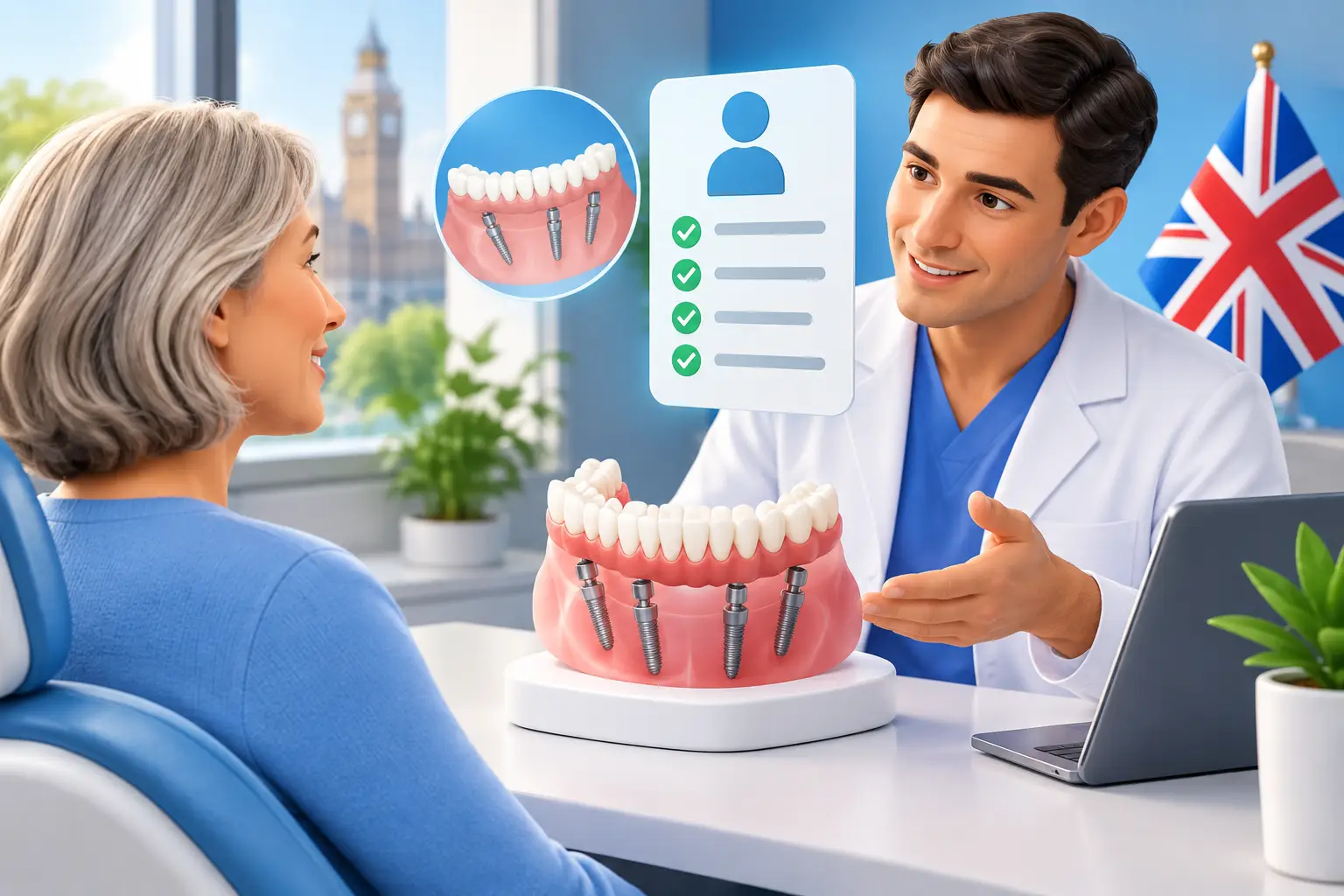
Replacing a full arch of failing or missing teeth can feel urgent, particularly when dentures are loose, painful or stopping you from eating comfortably. This all-on-four eligibility FAQ is designed to help you understand what a clinic needs to assess before recommending treatment - and why a quick yes from a photograph or social-media message is not enough.
All-on-four is a full-arch implant approach in which a fixed bridge is supported by four strategically placed dental implants. It can be a suitable option for some people with extensive tooth loss, but suitability is individual. Your jawbone, gum health, bite, medical history and expectations all need proper consideration before any plan is confirmed.
What does all-on-four eligibility actually mean?
Eligibility does not mean simply having missing teeth. It means that a clinician believes implants can be placed safely, positioned predictably and maintained successfully over the long term.
A proper assessment normally begins with your dental history and current symptoms. The clinician will want to know whether teeth have been lost through gum disease, decay, trauma or repeated failed dental work. They will also consider whether you are currently wearing a denture, whether you have pain or infection, and how your teeth meet when you bite.
The decisive part is imaging. A panoramic X-ray may provide an initial overview, but a CBCT scan gives the three-dimensional detail needed to assess bone volume, bone quality, nerve positions and the sinus area in the upper jaw. Until this has been reviewed by the treating clinician, any treatment outline should be treated as provisional.
Who is usually suitable for all-on-four treatment?
Many people who have no teeth, only a few remaining teeth, or teeth that cannot be predictably restored may be considered. All-on-four is often discussed where a full upper or lower arch needs replacement and a fixed alternative to a removable denture is wanted.
Age alone is rarely the deciding factor. A healthy person in their seventies may be a better implant candidate than a younger person with poorly controlled health conditions, active gum disease or heavy smoking habits. The question is not whether you fit a marketing profile. It is whether treatment can be planned safely and has a reasonable long-term outlook.
People are sometimes told they have "too little bone" for implants. That may be true in some cases, but it does not automatically rule out all-on-four. Angled rear implants can sometimes make use of available bone and avoid more extensive grafting. Equally, this approach is not a shortcut around every anatomical limitation. In some mouths, grafting, sinus treatment, a different implant plan or no implant treatment at all may be the safer recommendation.
Can I have all-on-four if I have gum disease?
Possibly, but active gum disease must be taken seriously. Gum disease is an infection and inflammatory condition that damages the tissues and bone supporting teeth. If it has caused tooth loss, it also suggests a higher future risk around implants if the underlying causes are not controlled.
Where teeth are still present, a clinic may recommend hygiene treatment, stabilisation or extractions before proceeding. Once implants are fitted, they still require daily cleaning and professional maintenance. Implants cannot decay, but the surrounding gums and bone can become inflamed. This is known as peri-implant disease, and it can threaten the result.
A good plan should explain how cleaning will work beneath the bridge, what maintenance appointments are expected after you return home, and what signs should prompt you to seek advice. A fixed bridge is not maintenance-free, even if it feels very much like natural teeth.
Does smoking affect all-on-four eligibility?
Yes. Smoking and nicotine use can affect healing, blood supply and the risk of implant complications. That includes cigarettes, vapes and other nicotine products. It does not always make treatment impossible, but a responsible clinician will discuss the increased risk plainly rather than treating it as a minor detail.
You may be asked to stop or significantly reduce nicotine use before surgery and throughout healing. The precise advice should come from the treating clinical team, based on your health and planned procedure. If stopping feels difficult, be honest about it. A treatment plan is safer when it reflects real circumstances rather than an answer given under pressure.
What medical conditions can affect suitability?
A full medical history is essential. Conditions such as uncontrolled diabetes, immune-system disorders, bleeding disorders, significant heart disease and previous head or neck radiotherapy may affect whether surgery is appropriate or how it should be managed. Some medicines also matter, including blood thinners, certain osteoporosis treatments and drugs that affect immune function.
This does not mean a medical condition automatically excludes you. It may mean your GP, dentist or specialist needs to provide information, your medication needs reviewing, or a different treatment route is preferable. Never stop prescribed medication to prepare for dental treatment unless the clinician managing that medication has instructed you to do so.
If you have had a heart attack, stroke, cancer treatment or major surgery, be specific about dates and ongoing care. The clinic cannot assess risk properly from a vague statement that you are "generally well".
Do I need to have all my teeth removed?
Not necessarily. All-on-four is usually a full-arch solution, so teeth in the arch being treated may need removal if they are failing or cannot be retained predictably. But healthy, stable teeth should not be extracted merely to make a package fit.
Sometimes a person needs treatment in one arch only. Sometimes preserving natural teeth, using individual implants, or choosing a removable option makes more clinical and financial sense. The right plan depends on your oral health, not on whether a particular procedure is widely advertised.
Will I receive teeth on the same day?
Many all-on-four plans include a temporary fixed bridge soon after implant placement. Whether this is safe depends on the stability achieved during surgery, bone quality, your bite and the clinician's judgement. It should never be presented as guaranteed before the surgical assessment.
The first bridge is usually a healing or provisional restoration, not necessarily the final bridge. After healing, the final bridge may be made with different materials and adjusted for comfort, speech and bite. Ask which bridge is included at each stage, what it is made from, and whether any later adjustments are included in the quotation.
All-on-four eligibility FAQ: what should I ask before travelling?
Before booking flights, make sure you have clear answers on the clinical plan and the practical arrangements. You should know who will review your scan, which dentist or oral surgeon is responsible for your care, and whether the proposed work is for one arch or both.
It is also reasonable to ask what happens if the scan changes the plan, whether extractions, sedation, temporary teeth, final teeth, medication and transfers are itemised, and how long you need to remain in Turkey. A low headline figure is not useful if essential stages have been left unclear.
For UK patients considering treatment abroad, continuity matters. Meditrust coordinates access to accreditation-checked partner clinics, with clinic standards, hygiene processes and patient feedback considered before a clinic is included. That coordination does not replace the treating clinician's independent duty to assess you, but it can help ensure that questions are answered before travel rather than after you have committed.
If you are offered an appointment with a visiting Turkish dentist in the UK, it can be a useful opportunity to discuss your case face to face. A £100 holding deposit may secure the appointment and is deducted from treatment costs if you proceed. It is still wise to ask what can be established at that consultation and what must wait for a scan and full clinical examination.
What if I am not eligible right now?
Being told to wait or pursue another option can be disappointing, but it is not a failed consultation. You may need gum treatment, better diabetes control, smoking support, healing after extractions, or further investigation of a painful tooth or jaw issue. In other situations, a removable denture or a smaller-scale implant plan may be more appropriate.
The safest route is the one that accounts for your health, your ability to maintain the result and the realities of aftercare at home. Think of eligibility as a careful clinical decision, not a hurdle to get past. The right clinic will be willing to explain its reasoning and give you space to think it through.
Already have a quote or a photo of your smile?
Send it to us on WhatsApp for an honest, confidential second opinion from our Dorset team. Free, and no obligation.
Work out your own cost with our Turkey teeth cost calculator
Prefer the full form? Start your enquiry