
Turkey Dental Implant Costs: What You Pay
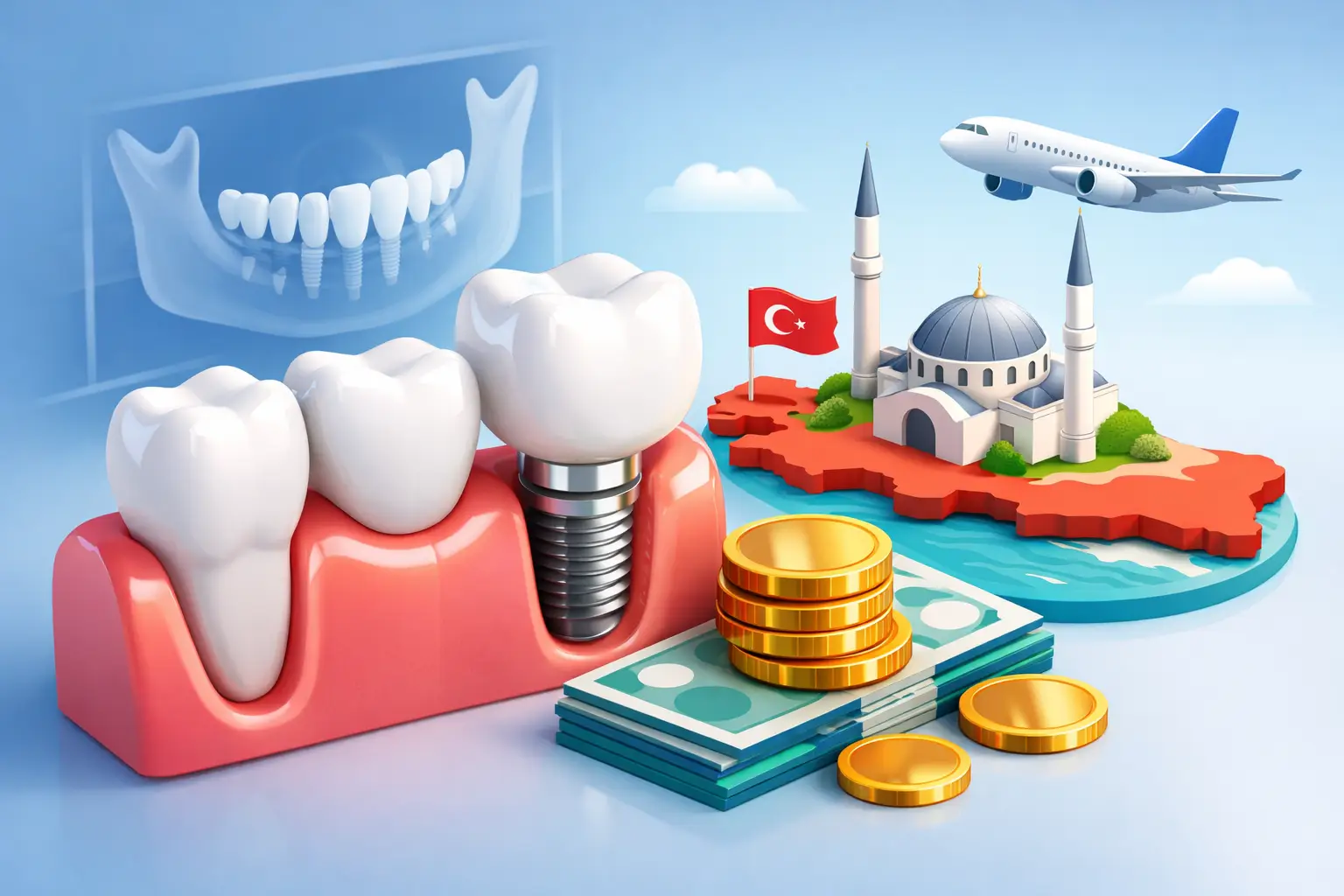
A missing tooth can affect far more than a photograph. It can change how you chew, speak and feel in company. For many UK patients, Turkey dental implant costs are worth investigating because private treatment can be considerably less expensive than at home. The useful question, though, is not simply, “How cheap is an implant?” It is, “What treatment am I actually being quoted for, who is providing it, and what happens if I need help afterwards?”
Why Turkey dental implant costs vary so much
An implant is not one off-the-shelf product with one fixed price. It is a treatment process. The titanium implant is placed in the jawbone, allowed to integrate with the bone, then restored with an abutment and a crown. Some patients also need a tooth removed, bone grafting, a sinus lift, gum treatment or temporary teeth before the final crown can be fitted.
That is why two online prices can look dramatically different while referring to different levels of care. One may cover the implant fixture only. Another may include a named implant system, a ceramic crown, scans, hotel transfers and follow-up appointments. A third may be a starting price for a straightforward case, with additional surgical work added later.
As a broad guide, a single implant with its final crown in Turkey may often be quoted at several hundred pounds rather than the higher four-figure sums sometimes seen in UK private dentistry. Full-arch solutions can also cost substantially less, but they are not directly comparable from one clinic to another. The number of implants, temporary bridge, final bridge material, sedation, bone condition and number of visits all affect the total.
Lower operating costs are part of the picture. So are exchange rates, clinic overheads and the high volume of private dental treatment in established Turkish centres. None of those factors removes the need for proper planning. A lower price is only good value when the clinical plan is appropriate and the quote is complete.
What should be included in an implant quote?
Before comparing Turkey dental implant costs, ask for an itemised treatment plan in writing. It should make clear whether the advertised figure covers the whole restoration or only its first stage.
A clear quotation will normally identify:
- the consultation, examination and 3D scan where required;
- any extraction, grafting, sinus lift or gum treatment recommended;
- the implant brand, abutment and final crown or bridge material;
- temporary teeth, laboratory fees and planned review appointments; and
- what is included in travel support, transfers and aftercare communication.
The implant brand matters because reputable systems have established quality controls and long-term component availability. That does not mean a patient must choose the most expensive name. It does mean the clinic should be willing to say exactly what is being placed and why it is suitable for the case.
Ask, too, what happens if the scan changes the initial plan. Remote estimates based on photographs or a basic X-ray can be helpful for budgeting, but they are not a final clinical diagnosis. A responsible clinic will explain that the final plan may need to change after examination and 3D imaging. The key is knowing how any additional work will be costed before consenting to it.
The treatment plan drives the real price
A straightforward single-tooth implant is usually the easiest cost to understand. Where there is enough healthy bone and the surrounding gums are stable, treatment may involve placing one implant and returning later for the final crown. Even then, healing time matters. Many patients need two trips, separated by several months, although some cases can be planned differently.
Replacing several teeth introduces more choices. Separate implants may be appropriate in one mouth, while an implant-supported bridge may be more sensible in another. For a full arch, clinics may discuss fixed solutions supported by four, six or more implants. The best option depends on bone volume, bite, gum health, the teeth that remain and the patient’s expectations. It is not a decision that should be made from a social-media photograph.
The final teeth also influence the budget. Materials differ in appearance, strength, repairability and cost. Zirconia is often selected for full-arch work because of its strength, while other ceramic options may be used in suitable situations. A good discussion covers the practical trade-offs, not just the whitest or quickest-looking result.
Be cautious with promises of “teeth in a day” if they are presented as suitable for everyone. Immediate temporary teeth can be possible in selected cases, but they do not remove the biological need for healing. Loading an implant too soon, or placing it where infection and bone loss have not been properly assessed, can create avoidable problems.
Do not compare prices without comparing clinics
A polished website and a low quote do not tell you enough about clinical standards. The clinic matters as much as the surgeon. You want to know who will assess you, who will place the implants, where the laboratory work is completed and how hygiene, imaging and complications are managed.
Useful questions include whether the clinic is properly licensed, whether the implant dentist has relevant experience in restorative and surgical cases, and whether the facility has appropriate imaging. Ask for the physical clinic address rather than relying on a hotel meeting point. Find out whether the same clinician will oversee the treatment from planning to fit, particularly for complex work.
It is also reasonable to ask how the clinic manages revisions or complications. No responsible provider can guarantee that every implant will integrate perfectly. Smoking, uncontrolled diabetes, gum disease, teeth grinding and poor oral hygiene can all affect outcomes. What matters is that risks are assessed honestly, instructions are clear and there is a defined route for clinical review.
This is where a coordinator can add practical protection. Meditrust filters partner clinics through checks including licensing, hygiene reviews, on-the-ground visits and ongoing patient feedback, rather than simply presenting a list of low prices. The aim is to help patients get matched, not sold to.
Budget for the whole journey, not just the dentistry
An implant quote can be fair and still not be the full cost of treatment. Flights, accommodation, local travel, meals and time away from work need to be considered alongside dentistry. If treatment requires two visits, budget for both from the start.
It is worth asking whether airport transfers and hotel arrangements are included or simply suggested. A coordinator should be clear about what it arranges, what you pay directly and what remains your responsibility. If you are travelling alone after surgery, the location of the hotel and the availability of a named contact become more important than a small saving on a room.
Build in a contingency too. A scan may show that grafting is needed, or a return appointment may need to move because healing has taken longer than expected. This is not a reason to assume the worst. It is sensible financial planning for treatment that involves the body’s own healing process.
How to judge a low implant price
Very low prices are not automatically unsafe, but they deserve closer questions. If a quote is vague, time-limited or offered before anyone has reviewed your dental history, treat it as marketing rather than a treatment plan. Pressure to pay a large non-refundable sum immediately is another reason to pause.
A safer process is measured. Share recent dental records where available, discuss relevant medical conditions and medicines, and receive a provisional plan that states its assumptions. Once you are assessed in person, you should understand the final recommendation, the alternatives and the cost before treatment begins.
For patients who would value a face-to-face conversation before travelling, UK appointment-only consultations can make the decision less remote. A £100 holding deposit for a session with a visiting Turkish dentist can be deducted from treatment costs if you proceed. It should never replace the clinic’s own proper assessment, but it can give you time to ask the questions that are hard to cover in a short video call.
Aftercare starts before you fly home
Good implant treatment does not end when the crown or bridge is fitted. You should leave with written aftercare instructions, information about the implant system used and a clear explanation of what is normal during recovery. Mild discomfort and swelling after surgical work can be expected; persistent pain, increasing swelling, fever, bleeding that does not settle or a loose restoration need prompt clinical advice.
Before booking, ask who your contact will be once you are back in the UK. A named coordinator who understands your plan can help communicate with the clinic and organise the next step if something feels wrong. This is particularly valuable when several professionals have been involved in a complex case.
You should also keep your usual UK dentist involved where possible. Routine hygiene care and monitoring remain important around implants, and future dentists will need accurate records of the work completed. Implants can last well, but they still require daily cleaning, professional review and sensible attention to gum health.
The right decision is rarely based on the lowest number in an advert. Take the time to understand the treatment, the people providing it and the support around it. Thinking it through is the first step towards a result you can feel comfortable living with.
Talk it through with us
Initial advice is free. A named coordinator will answer your questions.
Start your enquiry