
Hair Transplant Turkey Clinic Safety Guide
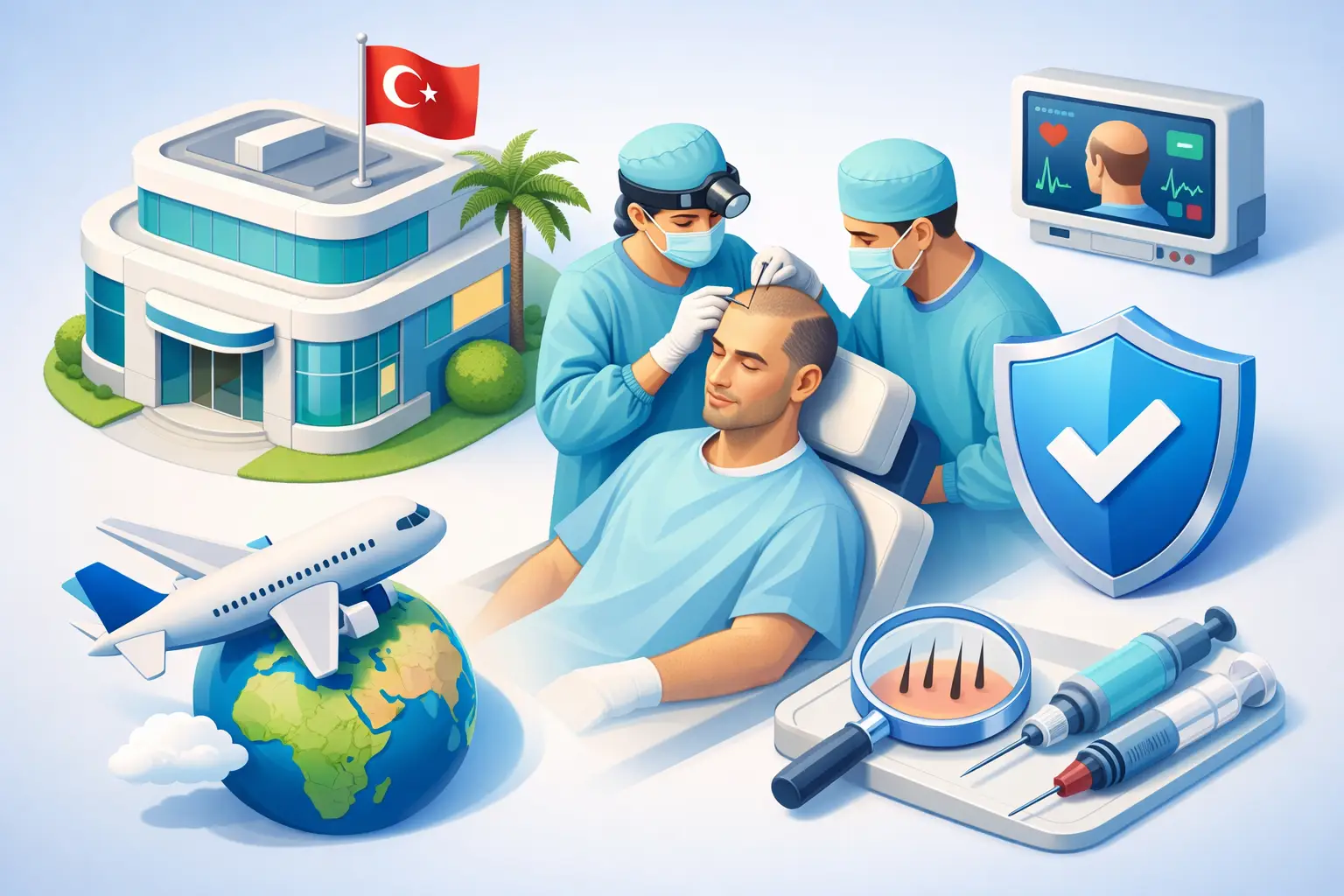
A receding hairline can make every mirror, photograph and video call feel more pointed than it should. That is why a hair transplant Turkey search should begin with clinical suitability and clear information, not a dramatic before-and-after video or a headline price. The right treatment can be life-changing for the right person, but it is still a surgical procedure and deserves careful planning.
Turkey has a large private healthcare sector and substantial experience in hair restoration. It also has clinics with very different standards, staffing models and approaches to patient care. The clinic matters as much as the surgeon. For UK patients, the real task is separating a properly planned treatment journey from a package that looks attractive until the detail is examined.
Hair transplant Turkey starts with the clinic
A good provider does not treat your donor area as an unlimited resource. The donor area, usually the back and sides of the scalp, has a finite number of hairs available for transplantation. An ethical consultation considers the density and quality of that hair, the likely progression of your loss, your age, your medical history and what can realistically be achieved over time.
Be cautious if a clinic promises an exact graft number or a perfect result before it has properly assessed you. Photographs and video consultations can be useful at the planning stage, but they should lead to a considered recommendation, not pressure to book quickly. A sensible plan also discusses whether treatment should be delayed, whether medical management may help, and whether your expectations fit the available donor supply.
It is worth asking who will perform each stage of the procedure. Hair transplantation involves consultation, hairline design, extraction, recipient-site creation and graft placement. Clinics may use technicians as part of a supervised team, but you should have a clear answer about the surgeon's role, the team's experience and who is accountable for your care on the day.
A coordinator should also be able to explain how partner clinics are checked. Licensing, hygiene processes, patient feedback, the clinic environment and ongoing communication standards all matter. A glossy social media account cannot tell you how a clinic responds when a patient has a question after returning to the UK.
Get matched, not sold to
The best procedure is not always the one most heavily marketed. FUE, or follicular unit extraction, is a method in which individual follicular units are removed from the donor area and implanted into thinning areas. It can leave tiny dot scars rather than a linear scar, but it is not automatically suitable for every hair type, pattern of loss or desired hairstyle.
You may also see DHI promoted as though it is a separate operation. In many cases, it refers to a way of implanting grafts with an implanter pen. It can be appropriate in certain plans, but the instrument itself does not guarantee density, survival or a natural-looking hairline. Technique, graft handling, design and honest donor management have more bearing on the outcome than a fashionable label.
A natural hairline should suit your face, age and likely future hair loss. A very low, densely packed hairline may look appealing in a drawing, yet demand too many grafts and leave little reserve for later work. This is one of the most important conversations to have before travelling.
Compare quotations line by line
Turkey is often less expensive than private treatment in the UK, but cost should be understood rather than simply compared. A low starting price may not show what is included, how many treatment days are expected, whether medication is extra, or what support is available after you fly home.
Ask for an itemised written quotation. It should make clear the proposed procedure, estimated graft range, hospital or clinic fees, surgeon and team involvement, transfers, hotel arrangements where included, medication, aftercare products and any deposit terms. If flights are not included, that should be equally clear. You should also know the cancellation and rearrangement policy before paying anything.
Do not assume that a larger graft number represents better value. Grafts are not interchangeable units of success. Extraction must protect the donor area, and placement must reflect the scalp's blood supply, hair direction and longer-term plan. A clinic willing to say that fewer grafts are safer or more appropriate may be offering the more responsible advice.
Plan the trip around recovery, not just availability
Most patients need several days in Turkey, although the exact itinerary depends on the clinic's treatment plan and follow-up schedule. You may need blood tests or an in-person assessment before the procedure, and you should allow time for the first wash or review if the clinic recommends it.
Avoid arranging a packed city break around surgery. In the early days, you may need to sleep with your head elevated, protect the transplanted area from knocks, avoid sweating and follow careful washing instructions. Alcohol, smoking, certain medicines and supplements can affect surgical planning or healing, so disclose everything you take and follow the clinician's advice rather than making assumptions.
Travel arrangements should be practical too. Confirm airport transfers, accommodation location, how to contact the clinic outside appointment hours and whether someone will meet you at each stage. Language should not become a barrier to consent. You need to understand the plan, the risks, the instructions and whom to call before treatment begins.
Hair transplant Turkey aftercare begins at home
The visible result takes patience. Transplanted hair commonly sheds after the procedure before new growth begins, and growth patterns vary between individuals. Early redness, scabbing and temporary changes in the appearance of the scalp can be expected, but your clinic should explain what is normal for your case and what needs urgent attention.
Written aftercare instructions matter because you will be following them in the UK, often without the reassurance of seeing the surgical team in person. Keep copies of your treatment plan, invoice, clinical notes where available and instructions for washing, medication and activity. Take clear progress photographs in the same lighting so that changes can be assessed properly.
Before booking, ask what happens if you are worried once you are home. Is there a named coordinator? Can you send photographs securely? How quickly can the clinic or coordinator respond? What is the process if you need to speak to the treating clinician? A provider cannot remove every risk, and no responsible service should promise a particular cosmetic outcome. It can, however, provide a clear route for advice and escalation.
If you develop severe pain, rapidly increasing swelling, fever, pus, persistent bleeding, breathing difficulties or any symptom that feels urgent, seek prompt medical advice locally. Do not wait for a message response from overseas if you need immediate care.
Questions worth asking before you commit
Can I speak to someone who understands the whole plan?
You should not have to repeat your circumstances to a different salesperson every time you call. One person, the whole way through, gives you a reliable point of contact for treatment planning, travel details and UK-based aftercare coordination. Meditrust works this way by matching patients with accreditation-checked partner clinics rather than asking them to choose from an unfiltered list.
Is a consultation a sales appointment?
It should be an opportunity to assess suitability and ask direct questions, not a pressure exercise. If you attend an appointment-only UK consultation, check whether a holding deposit applies and how it is treated if you proceed or decide not to. Any financial commitment should be explained in writing before you make it.
What if I am not a suitable candidate yet?
That can be useful information, not a failed consultation. Progressive hair loss, a weak donor area, an untreated scalp condition or unrealistic expectations may mean that a different approach, further assessment or time is needed. A clinic that protects your options for the future is taking your interests seriously.
Choosing treatment abroad should never feel like a leap of faith. Take the time to compare the clinical plan, not just the package, and make sure support does not end when your return flight lands.
Talk it through with us
Initial advice is free. A named coordinator will answer your questions.
Start your enquiry