
A Practical Guide to Turkish Dental Crowns
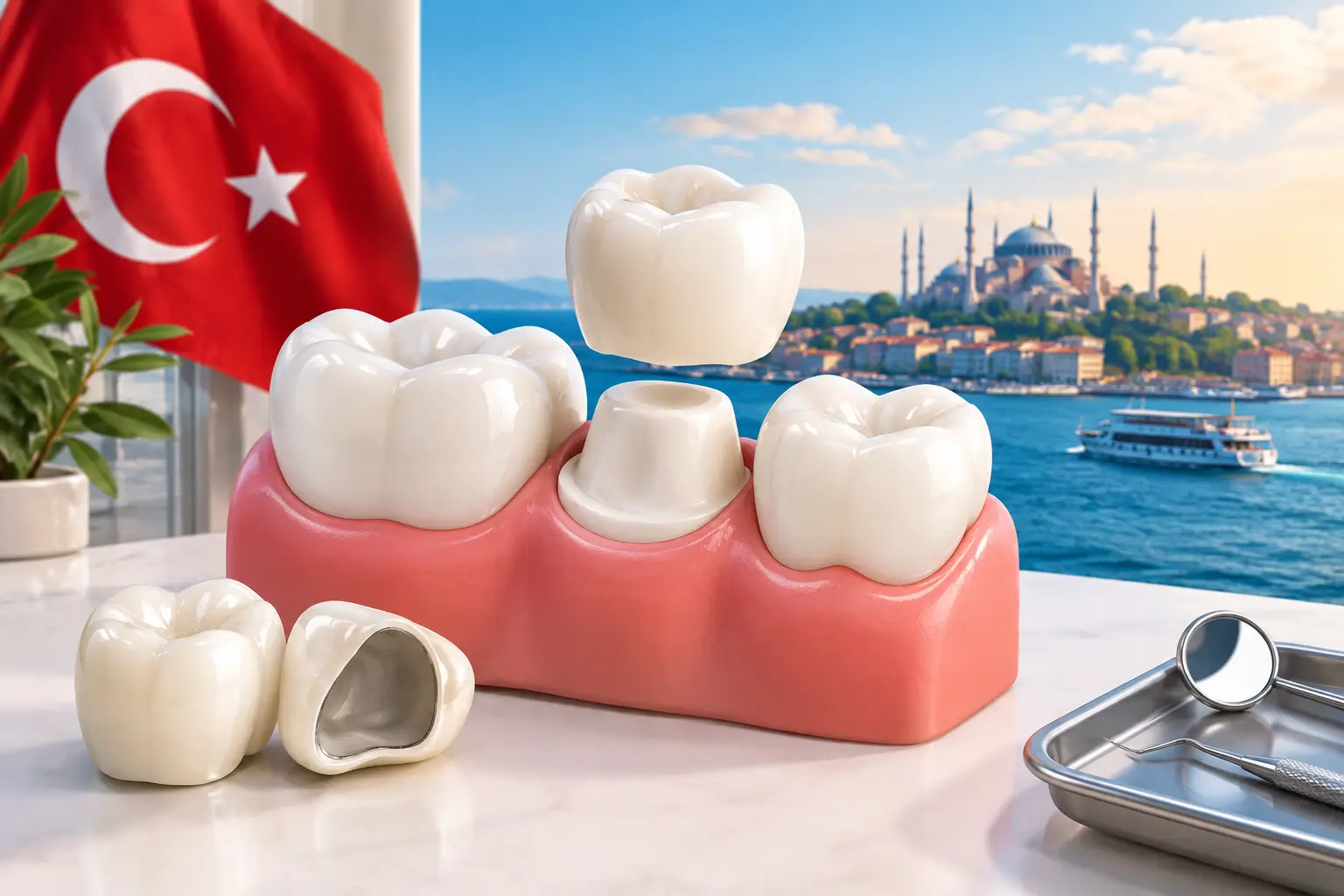
A crown can restore a tooth that is cracked, heavily filled, worn down or weakened after root-canal treatment. It is not automatically the answer to every cosmetic concern. This guide to Turkish dental crowns is for UK patients who want to understand what is being proposed, how to assess a clinic and what the trip and recovery may actually involve.
The lower headline cost in Turkey can be meaningful, particularly where several teeth need work. But a good decision should never begin and end with a social-media smile or a per-tooth price. The clinic matters as much as the dentist, and the treatment plan matters more than the destination.
What a dental crown is - and what it is not
A dental crown is a custom-made covering fitted over an existing tooth. The dentist prepares the tooth, takes a scan or impression, and a dental laboratory produces a crown designed to match its position, bite and appearance. It is then bonded into place.
Crowns are commonly used to protect structurally compromised teeth. They can also improve shape and colour, although a veneer, composite bonding, orthodontics or whitening may be a more conservative option when the underlying tooth is healthy. A responsible clinician should explain why a crown is recommended and discuss alternatives, rather than treating every cosmetic request with the same solution.
Patients sometimes use the term “Turkey teeth” to describe very bright, uniform crowns placed across multiple front teeth. That image has created understandable concern. The issue is not that crowns are made in Turkey. High-quality crown treatment is available there, as it is in the UK. The concern is unnecessary or excessive tooth preparation, rushed planning and treatment sold without a proper assessment of long-term oral health.
Guide to Turkish dental crowns: start with suitability
Before accepting a plan, ask what condition each tooth is in. Teeth affected by active decay, gum disease, infection, unstable bite patterns or grinding may need treatment or further investigation first. Placing attractive new crowns over unresolved problems does not make those problems disappear.
A proper assessment should include an examination and relevant X-rays or scans. The dentist should look at the gums, existing fillings, tooth vitality, bite and the amount of healthy tooth tissue remaining. If several front teeth are involved, smile design should be based on your facial features and preferences, but it must also allow you to bite and speak comfortably.
Be particularly careful if you are offered a fixed treatment plan from photographs alone. Photos can be useful for an initial conversation, but they cannot reliably show decay between teeth, infection around roots, bone levels or bite issues. A plan may change after examination. That is not necessarily a warning sign, provided the reason, options and revised costs are explained clearly before work begins.
Crown materials and why they matter
Many cosmetic crowns are made from zirconia, lithium disilicate or layered ceramic. There is no single best material for every tooth. Zirconia is known for strength and may suit areas exposed to heavier biting forces. Lithium disilicate can offer excellent translucency and is often considered for visible front teeth. Layered options can look highly natural but may have different strength characteristics.
The best choice depends on the tooth’s position, the amount of preparation required, your bite, whether you grind your teeth and the shade you want. Ask what material is proposed, whether it is a recognised branded material, who is making the crowns and whether a laboratory certificate or guarantee documentation will be provided. “Ceramic crown” on its own is not a full answer.
Choose a clinic, not a package
A dental holiday package can make travel feel simple, but it should not obscure the clinical details. Look beyond airport transfers, hotel images and before-and-after photographs. You need to know who will examine you, who will carry out the preparation and fitting, and what happens if the dentist finds something unexpected.
Ask direct questions before paying a deposit:
- Is the clinic licensed, and are the dentists registered to practise in Turkey?
- Will you receive X-rays, a written treatment plan and an itemised quotation before treatment starts?
- What is included in the quote, including temporary crowns, scans, root-canal work, medicines and follow-up visits?
- How many appointments are planned, and what happens if the laboratory needs more time?
- What warranty applies to the crown itself, and what exclusions apply if a tooth, root or gum problem develops?
- Who will you contact once you are back in the UK?
A warranty is helpful, but it is not the same as a clinical guarantee. A crown can fail because of decay, trauma, gum disease, biting forces or an underlying tooth problem that develops later. Read the terms carefully, including whether remedial travel, accommodation or local dental costs are covered. They often are not.
Meditrust coordinates patients with accreditation-checked private clinics rather than simply presenting a long list of providers. That distinction matters when you are comparing proposals: a clinic should be selected for clinical fit and standards, not because it has the loudest offer.
Understand the quotation before you travel
The right question is not simply, “How much is one crown?” It is, “What is the total likely cost of completing this plan safely?” A transparent quotation should identify the number and type of crowns, diagnostics, any temporary work, likely additional procedures and the currency in which you will pay.
Root-canal treatment, post and core build-ups, extractions, gum treatment, night guards and temporary restorations can all affect the final figure. They may not be needed, but they should be discussed as possibilities. Ask how the clinic handles clinical changes discovered during your first appointment. You should have time to consider the revised recommendation, rather than being pressed to decide while sitting in the chair.
Also account for flights, accommodation, meals, travel insurance and a sensible financial buffer. The lower treatment cost can still represent good value, but it should be evaluated against the whole journey and the long-term maintenance your teeth may require.
Plan the trip around the clinical timetable
Crown treatment is often completed over several days, though the appropriate length of stay depends on the number of teeth, laboratory workflow and whether other procedures are required. Do not book a return flight so tightly that there is no room for a fitting adjustment or review.
A typical sequence includes an examination and scans, tooth preparation, temporary crowns where needed, a laboratory stage, a try-in or fitting appointment, and final bite checks. If your gums are inflamed or you need root-canal treatment, the schedule may change. A clinic that insists every case can be completed in the same short window should be questioned.
Bring details of your medical history, current medicines, allergies and any previous dental X-rays if you have them. Tell the dentist if you clench or grind, have jaw pain, have had orthodontic treatment, or are unhappy with a particular aspect of your natural smile. These details influence both design and durability.
The fitting matters as much as the preparation
Before final bonding, take time to look at the shape, shade and length in natural light where possible. A good result should not only photograph well. It should feel comfortable when you close your teeth, speak and smile. Tell the dentist promptly if the crowns feel too bulky, too long, too bright or uneven.
Some sensitivity after preparation can occur, particularly if several teeth have been worked on. However, persistent pain, swelling, a crown that feels high when biting, or a loose restoration needs prompt dental advice. Keep copies of your X-rays, treatment records, crown details and receipts. They will be useful if you later see a dentist in the UK.
Aftercare starts when you get home
Crowns need the same daily care as natural teeth: thorough brushing with fluoride toothpaste, cleaning between teeth and regular hygiene appointments. The edge where crown meets tooth can still develop decay if plaque is allowed to build up. If you grind your teeth, a properly fitted night guard may help protect both crowns and natural enamel.
Arrange a routine review with your usual UK dentist once you are home, particularly after extensive work. This is not about assuming something is wrong. It is a sensible way to establish a baseline, check gum health and make sure your bite remains comfortable as you settle into the new restorations.
If you develop significant pain, facial swelling, fever, difficulty swallowing or trouble breathing, seek urgent medical or dental help in the UK. For less urgent concerns, contact the clinic and your coordinator with clear photographs and a description of when the symptoms began. Good aftercare depends on clear communication and a documented plan.
A final thought before you commit
Crowns can be life-changing when they are clinically justified, carefully designed and properly maintained. Give yourself permission to slow the process down, ask for the records and compare like with like. The right provider will respect that thinking it through is the first step.
Talk it through with us
Initial advice is free. A named coordinator will answer your questions.
Start your enquiry